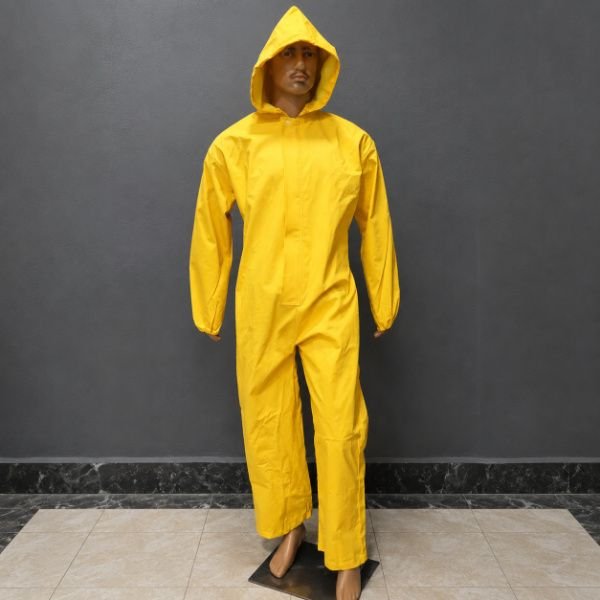
Chemical PPE Supplier in Kenya – Select Protection by Chemical & Exposure
Bansi Suppliers supplies chemical PPE in Kenya for factories, cleaning companies, laboratories, flower farms, agricultural operations, maintenance teams, workshops and industrial facilities.
Chemical PPE should be selected from the actual substance and work activity — not from a generic request for “chemical gloves” or a “chemical suit”. The chemical name, concentration, contact method, exposure duration and affected body areas all influence product selection.
Send the chemical or product name, available safety information, task, worker quantity and required PPE specification for quotation review.
There Is No Universal “Chemical-Proof” PPE
One glove material, protective suit, boot or respirator cannot be assumed suitable for every chemical.
Chemical resistance can change with the substance, concentration, temperature, duration of contact, PPE material, product construction and actual workplace conditions.
Compare the exact PPE model with the chemical being handled before approving a workplace requirement.
Start With the Chemical & Exposure
A strong chemical-PPE specification begins with the substance, the job and the expected contact.
1. Identify the Chemical
Record the chemical name or commercial product name instead of using only a general description such as “cleaning chemical”.
2. Confirm Concentration
The same substance can present different PPE requirements at different concentrations or dilution levels.
3. Describe the Task
Mixing, pouring, transferring, dipping, spraying, cleaning, sampling and maintenance can create different exposures.
4. Define Contact Type
Is exposure likely to be incidental contact, repeated splash, immersion, spray, mist, vapour, gas or contaminated surfaces?
5. Estimate Contact Duration
A short splash and continuous contact may require very different chemical-resistance performance.
6. Identify Body Areas at Risk
Consider hands, forearms, feet, torso, eyes, face and respiratory system separately.
Use the Safety Data Sheet & Product Instructions
Where a Safety Data Sheet, product label or manufacturer safety information is available, include it with your PPE request.
Exposure-control information can help identify required engineering controls, gloves, clothing, eye protection and respiratory protection.
The PPE recommendation should still be checked against the exact PPE model and manufacturer compatibility data.
Match PPE to the Exposure Route
The same chemical may require different protection depending on how workers can come into contact with it.
Hand Contact
Select chemical-resistant gloves according to substance, contact duration, glove material, cuff length and work demands.
Chemical-Resistant Gloves →Skin & Body Exposure
Aprons, coveralls or chemical suits may be required according to splash, spray or contamination risk.
Protective Clothing →Foot & Lower-Leg Exposure
Select footwear for the chemical, wet-work conditions and other workplace foot hazards.
Safety Gumboots →Eye & Face Splash
Chemical splash goggles and additional face protection may be required for pouring, mixing and transfer work.
Eye Protection →Inhalation Exposure
Respiratory PPE must match the exact dust, mist, gas, vapour or other airborne contaminant.
Respirator Supplier Kenya →Multiple Exposure Routes
Build a complete PPE ensemble where hands, body, feet, face and lungs may all be exposed.
Complete PPE Procurement →How to Select Chemical-Resistant Gloves
“Nitrile”, “PVC” or “rubber” is only the beginning of glove selection. The exact glove model must be compared with the chemical and working conditions.
Glove Material
Nitrile, PVC, natural rubber and other polymers have different resistance to different chemicals.
Breakthrough Time
Breakthrough data helps indicate how long a chemical takes to permeate the tested material under specified test conditions.
Permeation
A chemical can move through glove material at molecular level without obvious holes or visible damage.
Degradation
Chemical exposure can cause swelling, softening, hardening, cracking or loss of strength.
Cuff Length
Longer cuffs or gauntlets can provide additional wrist and forearm coverage where exposure extends beyond the hand.
Thickness & Dexterity
Thicker gloves may alter dexterity and grip. Selection should balance protection with the task the employee must perform.
Grip
Wet, oily or chemically contaminated surfaces may require suitable grip characteristics.
Mechanical Hazards
Chemical resistance does not automatically provide adequate cut, puncture or abrasion resistance.
Reuse & Disposal
Reusable gloves require inspection, cleaning, decontamination and storage according to manufacturer instructions.
Chemical Glove Standards & Product Data
ISO 374-1:2024 sets requirements for protective gloves intended to protect users against dangerous chemicals.
A standard marking does not mean that every chemical glove resists every substance. Check the exact chemical tested, performance data, glove material and model-specific documentation.
Browse Chemical-Resistant Gloves
Compare available glove options, then confirm chemical compatibility, size, cuff length, quantities and current availability before ordering.
Select Chemical Protective Clothing by Exposure
A general-purpose overall should not automatically be used where chemical splash, spray, particles or contamination require specialist clothing.
Type 3 – Liquid-Tight Protection
Type 3 garments are intended for liquid-tight protection where stronger liquid-jet exposure is part of the specified risk.
Type 4 – Spray-Tight Protection
Type 4 clothing is intended for spray-tight protection where liquid spray is the relevant exposure.
Type 5 – Particle Protection
Type 5 clothing is intended for protection against airborne solid particles where the garment is certified accordingly.
Type 6 – Limited Splash
Type 6 clothing provides limited protection against lighter liquid splash or spray according to the garment specification.
Aprons & Partial Body Protection
Aprons or sleeves may suit tasks where exposure is limited to particular body areas and the material matches the substance.
Garment Interfaces
Check how the suit works with gloves, boots, respirators, hood, cuffs and other PPE.
Look Beyond the Suit Material
Chemical performance can also depend on seams, closures, zippers, hood design, cuffs and interfaces between separate PPE items.
Chemical penetration may occur through seams, closures or imperfections even when the main garment material has useful resistance.
Chemical Spray Suits & Agricultural PPE
Spraying can expose workers through skin contact, droplets, splash and airborne contamination. The required PPE should follow the exact product, application method and available safety instructions.
Mixing & Preparation
Concentrated products may present a different exposure profile from the diluted spray mixture.
Backpack Spraying
Consider splash, spray drift, leaks, body contact, footwear and respiratory exposure.
Greenhouse Spraying
Enclosed or partly enclosed environments can affect airborne exposure, heat stress and PPE selection.
Chemical-Handling Footwear & Gumboots
Waterproof footwear is not automatically suitable for chemical contact.
Where chemicals can splash, spill or collect on the floor, confirm the exact boot material and chemical-resistance information.
Also consider slip resistance, toe protection, penetration hazards and whether the boot must interface with protective trousers or coveralls.
Eye & Face Protection for Chemical Splash
Mixing, pouring, transferring, opening containers, spraying and pressure cleaning can create splash or spray exposure to the eyes and face.
Safety Glasses
Open safety spectacles may be suitable for some impact hazards but should not automatically be treated as chemical splash goggles.
Chemical Splash Goggles
Enclosed goggles may be required where liquid splash can reach the eyes.
Face Shields
Face shields can provide additional facial coverage where suitable, but some tasks also require primary eye protection.
Respiratory Protection for Chemical Work
Dusts, mists, gases and vapours are different respiratory hazards. A respirator should be selected for the contaminant and workplace conditions.
Particulates
Dusts and some mists may require appropriate particulate filtration selected for the exposure.
Gases & Vapours
Gas or vapour hazards require a cartridge, canister or other respiratory system approved for that contaminant.
Mixed Hazards
Some processes create both particles and gas or vapour exposure, requiring an appropriate combined system.
Fit
Tight-fitting respirators depend on an effective face seal and correct fit for the wearer.
Cartridge Service Life
Gas and vapour cartridges have a finite service life. Replacement should follow an appropriate change schedule and manufacturer information.
Atmosphere Limitations
Air-purifying respirators do not supply oxygen and should not be treated as suitable for oxygen-deficient or immediately dangerous atmospheres.
Chemical PPE Must Work as One System
A good glove can still leave a worker exposed if chemical runs inside the cuff. A suitable suit can be compromised by an incompatible boot interface.
Check how gloves, sleeves, coveralls, boots, goggles, face protection and respirators work together before finalising the PPE set.
Chemical PPE by Workplace Application
Industry names are useful, but the actual substance and work process should drive the final selection.
| Application | Exposure Questions | PPE to Consider |
|---|---|---|
| Cleaning & Disinfection | Which detergent, disinfectant or degreaser? Diluted or concentrated? Splash or prolonged wet contact? | Chemical gloves, gumboots, apron or clothing, goggles and respiratory PPE where required |
| Pesticide Mixing & Spraying | Which pesticide? Mixing concentrate or spraying dilution? Backpack, greenhouse or open-field application? | Suitable spray suit, gloves, gumboots, eye protection and respiratory PPE according to product information |
| Solvent & Degreaser Handling | Which solvent? Contact time? Vapour generation? Immersion or wiping? | Compatible gloves, eye protection, clothing and correctly selected respiratory protection where needed |
| Acid / Alkali Transfer | Which substance and concentration? Manual pouring or pumped transfer? Splash pressure? | Chemical gloves, suitable clothing, boots, goggles and additional face protection as required |
| Laboratory Handling | Small-volume handling or larger transfer? Volatile chemical? Splash, reaction or contamination risk? | Task-specific gloves, lab/body protection, eye protection and respiratory controls where applicable |
| Industrial Maintenance | Oils, cleaners, treatment chemicals or process residues? Confined area? Spray or direct contact? | Gloves, footwear, body protection, goggles and respiratory PPE according to exposure |
Chemical PPE for Different Industries
Follow the task and substance when building each worker's PPE requirement.
Cleaning Companies
Chemical gloves, gumboots, aprons, goggles and respiratory PPE for cleaning and sanitation tasks.
PPE for Cleaning Companies →Manufacturing
Chemical PPE for production, maintenance, sanitation and industrial process work.
Manufacturing PPE →Flower Farms & Agriculture
PPE for pesticide mixing, spraying and chemical-handling operations.
Pesticide Spray PPE →Laboratories
Task-specific gloves, body protection and eye protection according to laboratory substances and procedures.
Submit Laboratory PPE RFQAutomotive & Workshops
PPE for suitable solvents, degreasers, oils, coolants and workshop chemicals.
Submit Workshop PPE RFQFood Processing
Chemical PPE for appropriate cleaning, sanitation and process-chemical activities.
Submit Food-Processing PPE RFQUnknown Chemical or Emergency Exposure?
Do not select ordinary chemical gloves, a disposable suit or an air-purifying respirator by guesswork when the substance, concentration or atmosphere is unknown.
Emergency, oxygen-deficient or immediately dangerous atmospheres require a competent hazard assessment and an appropriate emergency protection approach.
Chemical PPE Use, Removal & Replacement
Correct product selection is only part of the protection system. Workers also need suitable fitting, use, removal, cleaning and replacement procedures.
Inspect Before Use
Check for holes, cracks, damaged seams, degraded gloves, scratched lenses and other visible defects.
Avoid Contaminating Clean Areas
Establish procedures for removing contaminated PPE before workers enter clean vehicles, offices or welfare areas.
Doff Carefully
Gloves and garments should be removed in a way that limits transfer of contamination onto skin or clothing.
Clean Only When Permitted
Reusable PPE should be cleaned and decontaminated according to manufacturer instructions.
Replace Degraded PPE
Swelling, softening, cracking, discoloration or loss of strength can indicate chemical degradation.
Store Correctly
Store reusable PPE according to manufacturer guidance and away from contamination or conditions that may damage it.
Chemical PPE Procurement Matrix
Use a chemical-by-task schedule when several departments or substances are involved.
| Chemical / Product | Task | Exposure | PPE Requirement |
|---|---|---|---|
| Product A | Manual transfer | Hand contact + splash | Compatible gloves + goggles + body protection as required |
| Product B | Spraying | Droplets + body contact + airborne exposure | Spray clothing + gloves + boots + eye/RPE according to assessment |
| Product C | Equipment cleaning | Wet contact + splash | Gloves + footwear + apron/clothing + eye protection |
| Product D | Solvent wiping | Repeated hand contact + possible vapour | Compatible gloves + ventilation/respiratory controls as required |
Chemical PPE RFQ Checklist
Have a Chemical List, SDS or PPE Specification?
Send the available chemical information together with the work activity, PPE specification, employee quantities, sizes and delivery location.
Multiple chemicals, departments and PPE categories can be included in one technical RFQ.
Build the Complete Chemical Protection Requirement
Continue into the relevant product or application area once the chemical and exposure are understood.
Chemical-Resistant Gloves
Chemical hand protection selected according to substance and contact.
Browse Chemical Gloves →Protective Clothing
Chemical suits, coveralls, aprons and body protection for defined exposures.
Protective Clothing Kenya →Safety Gumboots
Wet-work and chemical-handling footwear according to the product specification.
Safety Gumboots Kenya →Eye & Face Protection
Goggles and additional facial protection for splash and spray hazards.
Eye Protection Kenya →Respiratory Protection
Respirators, filters and cartridges selected for the airborne contaminant.
Respirator Supplier Kenya →Pesticide Spray PPE
Protective suits and supporting PPE for suitable agricultural spraying tasks.
Pesticide Spray Suits →Chemical PPE Supplier Kenya – Frequently Asked Questions
Common questions from HSE teams, procurement departments, factories, farms, laboratories and cleaning companies.
What information is needed to select chemical PPE?
Start with the chemical or product name, concentration, task, expected contact, exposure duration and body areas at risk. Include the Safety Data Sheet or product information where available.
Is there one glove that works for every chemical?
No. Glove suitability depends on the chemical, concentration, glove material, thickness, contact duration, temperature and exact product performance.
What is chemical breakthrough time?
Breakthrough time is a test result used to indicate how long a chemical takes to permeate through a tested protective material under specified conditions. Actual workplace performance can differ.
What is permeation?
Permeation is the movement of a chemical through a protective material at molecular level. It can occur without visible holes or obvious damage.
What is chemical degradation?
Degradation is physical deterioration of PPE material caused by chemical exposure, such as swelling, softening, cracking, discoloration or loss of strength.
Does ISO 374-1:2024 mean a glove resists every chemical?
No. ISO 374-1:2024 sets requirements for gloves intended to protect against dangerous chemicals, but the exact tested chemicals and product performance still need to be reviewed.
What does Type 3 chemical clothing mean?
Type 3 refers to liquid-tight protective clothing for stronger liquid-jet exposure where the exact garment is certified accordingly.
What does Type 4 chemical clothing mean?
Type 4 refers to spray-tight protective clothing where liquid spray is the relevant exposure and the garment is certified accordingly.
What does Type 5 protective clothing mean?
Type 5 clothing is intended for protection against airborne solid particles where the exact garment carries the appropriate certification.
What does Type 6 protective clothing mean?
Type 6 clothing provides limited protection against lighter liquid splash or spray according to the exact garment specification.
Can ordinary work overalls be used for chemical handling?
Not automatically. Standard workwear should not be treated as specialist chemical protective clothing unless the exact garment is designed and documented for that exposure.
Are waterproof gumboots chemical resistant?
Not automatically. Waterproofing and chemical resistance are different properties. Check the exact boot material and chemical compatibility.
Are safety glasses enough for chemical splash?
Not always. Enclosed chemical splash goggles may be required where liquids can reach the eyes. Some tasks may also need additional face protection.
Can a face shield replace chemical splash goggles?
Not automatically. Some tasks require primary eye protection together with additional facial protection.
Can a dust mask protect against chemical vapours?
Not automatically. Particulates, gases and vapours are different respiratory hazards and require correctly selected respiratory protection.
How do I choose a chemical respirator cartridge?
Identify the airborne contaminant and use a cartridge or canister approved for that contaminant and compatible with the respirator system. Consider the workplace respiratory-protection programme and manufacturer guidance.
How often should chemical respirator cartridges be changed?
Gas and vapour cartridge service life depends on the contaminant, concentration, humidity, breathing rate and other conditions. Use an appropriate change schedule and manufacturer guidance rather than relying only on smell.
Can an air-purifying respirator be used where oxygen is low?
No. Air-purifying respirators do not supply oxygen and should not be treated as suitable for oxygen-deficient or immediately dangerous atmospheres.
Do you supply PPE for pesticide spraying?
Yes. Pesticide and agricultural PPE requirements can include suitable spray clothing, gloves, gumboots, eye protection and respiratory PPE according to the product and application method.
Do you supply chemical PPE for cleaning companies?
Yes. Requirements can include gloves, gumboots, aprons, goggles and respiratory PPE according to the cleaning chemicals and tasks involved.
Do you supply chemical PPE for factories?
Yes. Manufacturing requirements can include chemical PPE for production, maintenance, sanitation, laboratory and other industrial operations.
Can we send an SDS with our RFQ?
Yes. Safety Data Sheets, product labels and other chemical information can help clarify the PPE requirement.
Can several chemical PPE items be quoted together?
Yes. Gloves, clothing, footwear, eye protection and respiratory PPE can be consolidated into one technical quotation.
Can chemical PPE be supplied in bulk across Kenya?
Yes. Companies can submit workforce quantities, specifications, locations and required dates for bulk quotation and delivery coordination.
Request Chemical PPE Pricing in Kenya
Send the chemical or product name, concentration, work activity, exposure type, PPE specification, worker quantity and delivery location.
Attach the Safety Data Sheet, product label or existing technical specification where available.
Bansi Suppliers — Source. Supply. Succeed.