Disposable Respirators and Dust Masks in Kenya
Buy disposable respirators and industrial dust masks in Kenya from Bansi Suppliers. We support construction companies, factories, warehouses, workshops, cleaning contractors, institutions and project teams requiring practical respiratory protection for assessed dust and particle hazards.
Choose from general workplace dust masks, cup-shaped respirators, flat-fold masks, valved respirators and certified filtering facepieces available for individual, carton and bulk corporate supply.
Bulk Dust Mask Supply
Purchase disposable respirators by unit, packet, carton or bulk quantity for projects, departments and workforce programmes.
Multiple Mask Options
Compare cup-shaped, flat-fold, valved, non-valved and certified filtering facepiece respirators.
RFQ and BOQ Support
Submit your product specification, procurement list, BOQ or tender schedule for structured commercial pricing.
Delivery Across Kenya
Coordinate delivery to offices, factories, warehouses, institutions, workshops and active project sites.
Practical Respiratory Protection for Dusty Workplaces
Disposable filtering facepieces provide lightweight respiratory protection for suitable workplace particle hazards without requiring separate filters or cartridges.
What Is a Disposable Respirator?
A disposable respirator is a filtering facepiece worn over the nose and mouth. Its body contains the filtration material, meaning the entire respirator is replaced when it becomes damaged, wet, contaminated, heavily loaded or otherwise unsuitable for use.
Disposable respirators are commonly selected for suitable dust and particle hazards generated during construction, renovation, sanding, cutting, sweeping, packaging, material handling and industrial maintenance.
Product capability varies significantly. A basic dust mask should not automatically be treated as an N95, FFP2 or other certified respirator unless the required classification is clearly marked and supported by the relevant product information.
For reusable facepieces, filters and cartridges, explore our complete respirators in Kenya range.
What to Include in Your Quotation Request
Sending complete information helps our procurement team identify suitable available options and prepare accurate pricing.
- The workplace task or application
- The dust, particle or material involved
- The required standard or filtration classification
- Valved or non-valved preference
- Cup-shaped or flat-fold preference
- Quantity required by unit, packet or carton
- Preferred brand or product code
- Delivery location and required date
Shop Disposable Respirators in Kenya
Browse available disposable dust masks and filtering facepiece respirators. Open an individual product to review its current description, pricing and ordering information.
-
Bulk Dust Masks in Kenya, Respiratory Equipment, Safety Equipment Suppliers In Kenya, Safety Items
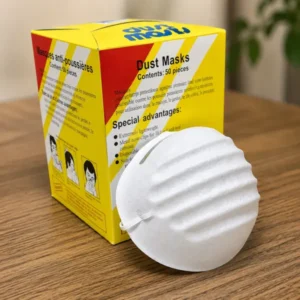
Disposable Respirator in Kenya
Original price was: KSh1,200.KSh900Current price is: KSh900. + VATOrder via WhatsApp -
Bulk Dust Masks in Kenya, Respiratory Equipment, Safety Equipment Suppliers In Kenya, Safety Items
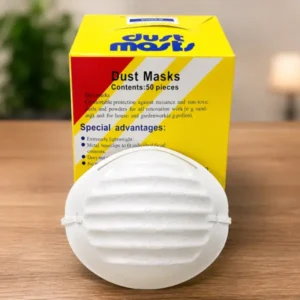
Quality Taiwan Disposable Dust Masks
Original price was: KSh1,250.KSh1,050Current price is: KSh1,050. + VATOrder via WhatsApp -
Bulk Dust Masks in Kenya, Respiratory Equipment, Safety Equipment Suppliers In Kenya, Safety Items
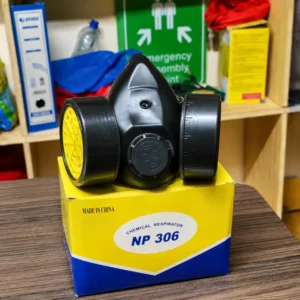
Reusable Respirator in Kenya
Original price was: KSh800.KSh500Current price is: KSh500. + VATOrder via WhatsApp -
Bulk Dust Masks in Kenya, Respiratory Equipment, Safety Equipment Suppliers In Kenya, Safety Items
Taiwan Disposable Dust Masks Kenya
Original price was: KSh1,200.KSh900Current price is: KSh900. + VATOrder via WhatsApp -
Bulk Dust Masks in Kenya, Eye and Face Protection, Safety Equipment Suppliers In Kenya, Safety Items
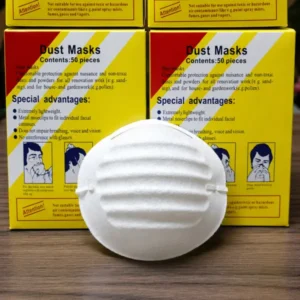
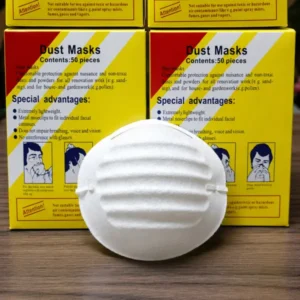
Yellow Box Disposable Dust Masks
Original price was: KSh1,500.KSh900Current price is: KSh900. + VATOrder via WhatsApp


Compare Disposable Dust Mask Options
Shape, filtration performance, valve design and fit all influence whether a disposable respirator is suitable for the assessed task.
General Workplace Dust Masks
Lightweight masks for suitable nuisance-dust, sweeping, packaging, housekeeping and general workplace applications.
These masks should not automatically be selected for toxic dust, chemical gases, solvent vapours or welding fumes.
Cup-Shaped Respirators
Pre-formed respirators designed to maintain their shape around the nose and mouth during use.
Selected models may include an adjustable nose clip, internal cushioning and dual head straps.
Flat-Fold Respirators
Compact masks that unfold before use and can be stored or distributed easily in workplace PPE kits.
Their compact format makes them practical for projects, company stores and individual employee allocation.
Valved Disposable Respirators
Selected models include an exhalation valve intended to reduce heat and moisture build-up inside the facepiece.
Confirm that a valved respirator is acceptable for the workplace, hygiene procedure and source-control requirement.
Non-Valved Disposable Respirators
Non-valved masks filter inhaled air through the facepiece material and do not contain a separate exhalation valve.
They may be preferred where outward source control or workplace hygiene requirements make exhalation valves unsuitable.
Certified Filtering Facepieces
Selected disposable respirators may carry classifications such as N95, KN95, FFP1, FFP2 or FFP3, depending on the applicable certification system.
Check the markings, manufacturer information and supporting documentation whenever a particular classification is specified.
Disposable Respirators for Construction and Industrial Work
The correct disposable respirator must be selected according to the actual airborne hazard and expected exposure—not the industry name alone.
Construction Dust Masks
Disposable respirators may be used for suitable drilling, cutting, cement handling, surface preparation, sweeping and site-cleaning dust hazards.
For more demanding construction dust, explore our dust respirators in Kenya selection.
Renovation and Refurbishment
Suitable options may be selected for assessed sanding, plaster, debris handling, drilling and surface-preparation activities.
Manufacturing Plants
Disposable filtering facepieces may support selected production, processing, packaging, powder handling and maintenance tasks.
Warehouses and Stores
Masks may be required for suitable dusty storage, packaging, loading, stock handling and warehouse-cleaning activities.
Cleaning Contractors
Disposable masks may support suitable sweeping, dusting and facilities-maintenance tasks where airborne particles are present.
Woodworking and Workshops
Respirator selection may be required for assessed sanding, cutting, material preparation and workshop-cleaning dust.
Cement and Powder Handling
Fine cement and powder particles may require a suitably classified respirator selected according to the workplace assessment.
Agriculture and Flower Farms
Disposable respirators may be used for selected dry-particle tasks. Chemical spraying may require a suitable reusable chemical respirator instead.
Schools and Institutions
Respirators can be procured for maintenance teams, workshops, cleaning departments and suitable refurbishment projects.
Basic Dust Mask vs Certified Disposable Respirator
Products may look similar but provide very different levels of filtration, fit and documented performance.
Basic Dust Masks
General dust masks may be suitable for selected nuisance-dust and housekeeping applications, depending on their stated product use.
- Lightweight general-purpose construction
- May use ear loops or simple elastic straps
- May not provide a tight facial seal
- Certification may not be provided
- Not suitable for every industrial hazard
Certified Filtering Facepieces
Certified respirators are tested according to a stated standard and should carry the appropriate product classification and manufacturer information.
- Defined filtration classification
- Designed to achieve a closer facial fit
- Product markings and instructions available
- Selected according to the assessed hazard
- Fit and user seal checks remain essential
How to Choose a Disposable Respirator
Choosing solely by price or appearance can result in unsuitable respiratory protection.
1. Identify the Airborne Hazard
Determine whether the exposure involves coarse dust, fine particles, mist, fume, gas, vapour or a combination.
2. Assess Exposure Conditions
Consider concentration, duration, ventilation, employee activity, task frequency and workplace conditions.
3. Confirm Mask Suitability
Verify that a disposable filtering facepiece is permitted for the assessed hazard and exposure level.
4. Confirm the Classification
Review the marked standard, certification, filtration class and manufacturer’s stated limitations.
5. Check Fit and Comfort
Review the mask shape, head straps, nose clip, face seal and suitability for extended workplace use.
6. Calculate Procurement Quantities
Consider employee numbers, shift patterns, project duration, replacement frequency and contingency stock.
Bulk Disposable Respirator Supply in Kenya
Bansi Suppliers supports organisations requiring structured, repeatable and multi-site respiratory protection procurement.
Construction Projects
Procure dust masks for site teams, tradespeople, subcontractors, technicians, supervisors and authorised visitors.
Factories and Warehouses
Supply masks for production, stores, maintenance, packaging, cleaning and material-handling teams.
Institutions
Purchase respirators for school workshops, facilities departments, maintenance teams and refurbishment projects.
Facility-Management Companies
Arrange bulk, scheduled or repeat supply for cleaning teams, commercial properties and multi-building operations.
How to Fit a Disposable Respirator Correctly
Workers should follow the instructions supplied with the selected respirator and complete the required user seal check before entering the work area.
Inspect Before Wearing
Check the mask body, nose section, head straps and exhalation valve for damage, contamination or deterioration.
Cover the Nose and Mouth
Position the respirator fully over the nose and mouth, with the lower edge fitted securely beneath the chin.
Position Head Straps Correctly
Arrange the straps according to the manufacturer’s instructions without twisting or overstretching them.
Shape the Nose Clip
Where provided, use both hands to mould the nose clip around the bridge and sides of the nose.
Complete a User Seal Check
Confirm the respirator is sealing correctly before beginning the task or entering the designated work area.
Do Not Wear Over Facial Hair
Facial hair crossing the sealing surface can prevent a tight-fitting respirator from forming an effective seal.
When Should a Disposable Respirator Be Replaced?
Disposable respirators have a limited service life and should never be used after they become damaged, contaminated or unable to seal.
Visible Damage
Replace masks that are torn, punctured, crushed, deformed or otherwise physically damaged.
Broken or Loose Straps
Damaged or stretched straps may prevent the respirator from remaining securely positioned.
Moisture and Contamination
Replace a respirator that becomes wet, visibly dirty, chemically contaminated or heavily loaded with particles.
Breathing Becomes Difficult
Increased breathing resistance can indicate the filtration material has become excessively loaded.
The Mask No Longer Seals
Stop using the respirator when it cannot maintain a secure fit or pass the required user seal check.
Manufacturer Replacement Guidance
Follow the product instructions and workplace procedure governing duration of use, replacement and disposal.
Disposable vs Reusable Respirators
Disposable and reusable respirators serve different workplace requirements. The decision should be based on the assessed airborne hazard and frequency of use.
Disposable Respirators
Disposable respirators are complete filtering facepieces designed for limited service in suitable particle applications.
- Lightweight and compact
- No separate filter installation
- Convenient workforce distribution
- Lower maintenance requirements
- Entire mask is replaced when unsuitable
Reusable Respirators
Reusable respirators use a durable facepiece fitted with compatible replaceable filters or cartridges.
- Suitable for repeated use when maintained
- Replaceable filters or chemical cartridges
- Half-face and full-face options
- Requires cleaning and inspection
- May support wider filtration configurations
Explore More Respirator Solutions
Compare masks and respirators according to the workplace hazard, filtration requirement and frequency of use.
Respirators in Kenya
Explore disposable and reusable respiratory protection products.
View all respirator solutionsReusable Respirators
Durable facepieces for compatible filters and cartridges.
View reusable respiratorsChemical Respirators
Reusable systems for selected gases, vapours and chemical work.
View chemical respiratorsDust Respirators
Respiratory protection for assessed workplace dust hazards.
View dust respiratorsHalf-Face Respirators
Reusable masks covering the nose and mouth.
View half-face respiratorsFull-Face Respirators
Respirators providing respiratory and facial coverage.
View full-face respiratorsRespirator Filters
Replacement filtration components for compatible systems.
View respirator filtersPaint Respirators
Respiratory equipment for selected painting and coating tasks.
View paint respiratorsWhy Companies Buy Disposable Respirators from Us
We support procurement departments, contractors, factories and institutions requiring reliable workplace supplies and commercial documentation.
Professional Quotations
Submit quantities, product specifications and delivery details for a structured quotation.
Bulk Procurement Support
Request unit, packet, carton and workforce quantities for projects and ongoing operations.
Commercial Documentation
Request quotation, invoice and delivery documents required by your procurement and accounts teams.
Nationwide Delivery
Coordinate delivery to Nairobi and commercial, institutional and industrial locations across Kenya.
Frequently Asked Questions About Disposable Respirators in Kenya
Answers to common questions from contractors, safety officers, procurement departments and institutional buyers.
Where can I buy disposable respirators in Kenya?
Bansi Suppliers supplies disposable dust masks and filtering facepiece respirators for construction, factories, warehouses, workshops, institutions and commercial workplaces across Kenya.
Can I order disposable dust masks in bulk?
Yes. Quotations can be prepared for units, packets, cartons, projects, company departments and complete workforce requirements.
Are all disposable masks N95 respirators?
No. Disposable masks are manufactured to different standards and filtration levels. Confirm that the required N95 or alternative classification is clearly marked and documented.
Can disposable dust masks protect against chemical vapours?
General disposable dust masks do not automatically protect against chemical gases or solvent vapours. A suitable reusable chemical respirator and compatible cartridge may be required.
What is the difference between valved and non-valved masks?
A valved respirator allows exhaled air to exit through a valve, which may improve comfort. A non-valved mask filters air through the facepiece in both directions.
How long can a disposable respirator be used?
Service life depends on the product, exposure, dust loading, moisture, contamination, physical condition and manufacturer guidance.
When should a dust mask be replaced?
Replace it when damaged, wet, visibly contaminated, difficult to breathe through, unable to seal or when required by the product instructions and workplace procedure.
Can Bansi Suppliers prepare a formal RFQ quotation?
Yes. Provide the required mask type, filtration specification, quantity, application, delivery location and required date for a professional quotation.
Request Disposable Respirator Pricing in Kenya
Send your required specification, workplace application, quantity, packaging preference, delivery location and required date. Our procurement team will provide available product options and commercial pricing.