Work at Height Safety Equipment Suppliers Kenya – Harnesses, Lanyards & Fall Protection
Bansi Suppliers provides work-at-height and fall-protection equipment for construction companies, engineering firms, maintenance teams, telecommunications contractors, solar installers, industrial facilities and project teams across Kenya.
Source full-body safety harnesses, lanyards, shock-absorbing systems, double-lanyard harness options, height-safety helmets and related PPE for approved work-at-height systems and corporate procurement.
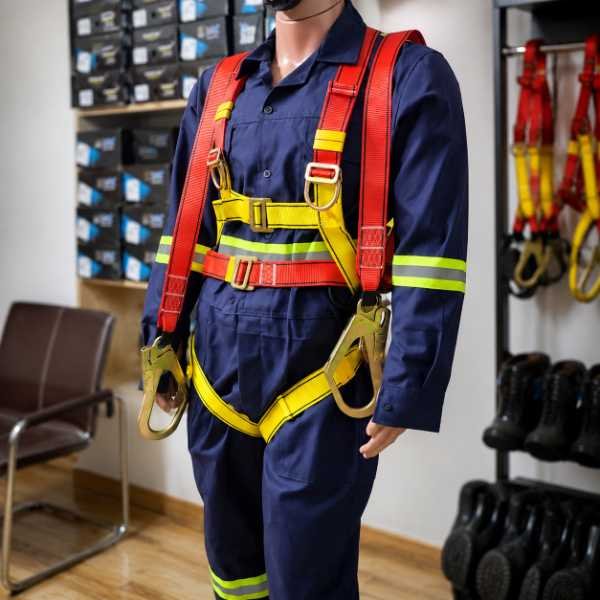
Browse Fall Protection & Work-at-Height Equipment
Explore available safety harnesses and related work-at-height PPE for contractors, engineering teams, maintenance departments and project operations. Confirm the exact product specification and system requirements before use.
-
Fall Protection, Industrial Safety Harnesses, Safety Equipment Suppliers In Kenya, Safety Items
Construction Safety Harness Suppliers Kenya
Original price was: KSh5,500.KSh3,300Current price is: KSh3,300. + VATOrder via WhatsApp -
Fall Protection, Industrial Safety Harnesses, Safety Equipment Suppliers In Kenya, Safety Items
Double Hook Safety Harness
Original price was: KSh9,500.KSh9,200Current price is: KSh9,200. + VATOrder via WhatsApp -
Fall Protection, Industrial Safety Harnesses, Safety Equipment Suppliers In Kenya, Safety Items
Double Lanyard Safety Harness Suppliers Kenya
Original price was: KSh12,000.KSh9,500Current price is: KSh9,500. + VATOrder via WhatsApp -
Fall Protection, Industrial Safety Harnesses, Safety Equipment Suppliers In Kenya
Full Body Safety Harness Suppliers Kenya
Original price was: KSh12,000.KSh9,500Current price is: KSh9,500. + VATOrder via WhatsApp -
Fall Protection, Industrial Safety Harnesses, Safety Equipment Suppliers In Kenya, Safety Items
Safety Harness Belt Price In Kenya
Original price was: KSh10,000.KSh9,000Current price is: KSh9,000. + VATOrder via WhatsApp -
Fall Protection, Industrial Safety Harnesses, Safety Equipment Suppliers In Kenya, Safety Items
Safety Harness for Electrical Contractors Kenya
Original price was: KSh12,000.KSh9,500Current price is: KSh9,500. + VATOrder via WhatsApp -
Fall Protection, Industrial Safety Harnesses, Safety Equipment Suppliers In Kenya, Safety Items
Safety Harness for Engineering Contractors Kenya
Original price was: KSh12,800.KSh9,500Current price is: KSh9,500. + VATOrder via WhatsApp -
Fall Protection, Industrial Safety Harnesses, Safety Equipment Suppliers In Kenya, Safety Items
Safety Harness for Facilities Management Companies Kenya
Original price was: KSh5,500.KSh3,300Current price is: KSh3,300. + VATOrder via WhatsApp -
Fall Protection, Industrial Safety Harnesses, Safety Equipment Suppliers In Kenya, Safety Items
Safety Harness for Factory Workers Kenya
Original price was: KSh5,599.KSh3,300Current price is: KSh3,300. + VATOrder via WhatsApp -
Fall Protection, Industrial Safety Harnesses, Safety Equipment Suppliers In Kenya, Safety Items
Safety Harness for HVAC Contractors Kenya
Original price was: KSh12,000.KSh9,500Current price is: KSh9,500. + VATOrder via WhatsApp -
Fall Protection, Industrial Safety Harnesses, Safety Equipment Suppliers In Kenya, Safety Items
Safety Harness for Industrial Maintenance Kenya
Original price was: KSh12,000.KSh9,500Current price is: KSh9,500. + VATOrder via WhatsApp -
Fall Protection, Industrial Safety Harnesses, Safety Equipment Suppliers In Kenya, Safety Items
Safety Harness for Maintenance Contractors Kenya
Original price was: KSh5,900.KSh3,300Current price is: KSh3,300. + VATOrder via WhatsApp
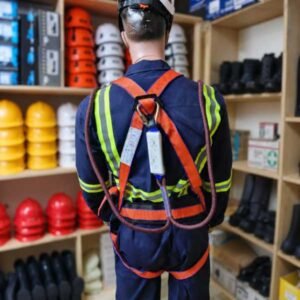


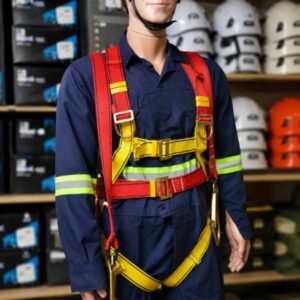
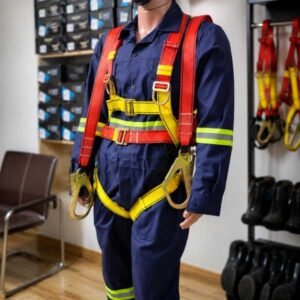


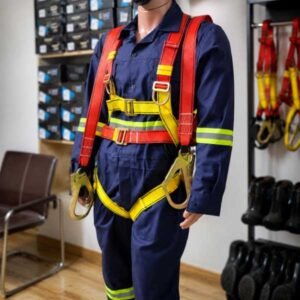
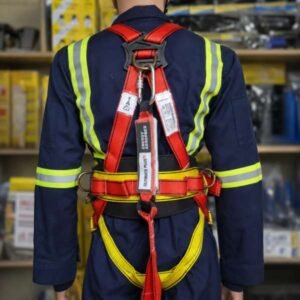
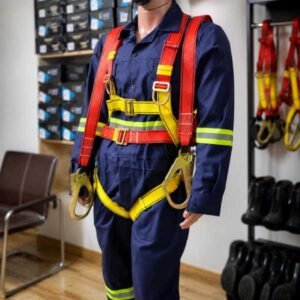
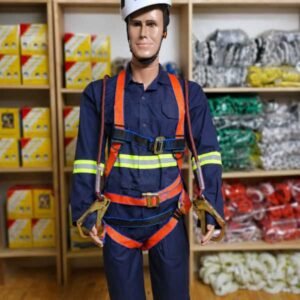
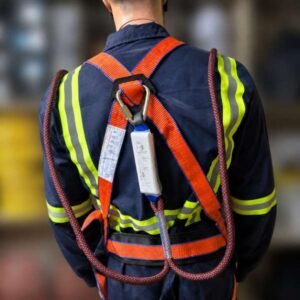
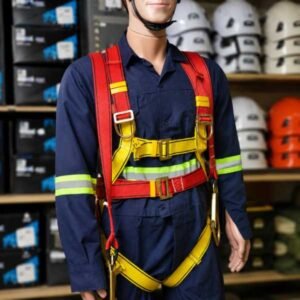
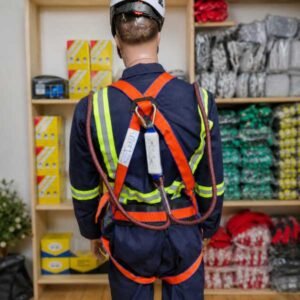
Professional Fall Protection Equipment Supply in Kenya
Work at height can expose employees to serious fall hazards. Suitable equipment should therefore form part of a properly planned height-safety system rather than being selected as isolated PPE items.
The correct arrangement depends on the task, working position, movement required, available anchorage, equipment compatibility and workplace risk assessment.
Construction Work at Height
Height-safety equipment for suitable building, roofing, structural and elevated construction work.
Industrial Maintenance
Fall-protection PPE for approved elevated maintenance and engineering activities.
Telecommunications
Height-safety equipment for appropriate tower, network and technical field operations.
Solar Installation
Fall-protection requirements for approved rooftop and elevated solar-installation work.
Facilities & Building Maintenance
Height-safety PPE for appropriate rooftop, facade and elevated maintenance tasks.
Bulk Project Supply
Submit harness types, connection requirements, quantities and technical specifications for corporate quotation support.
Work-at-Height & Fall Protection Equipment
A complete system can involve several components. Every component should be suitable for the planned work and compatible with the rest of the system.
Full-Body Safety Harnesses
Harness options for approved construction, maintenance, engineering and technical work-at-height systems.
Full-Body HarnessesSingle Lanyards
Connection components for suitable approved height-safety arrangements, depending on the exact system.
Safety LanyardsDouble Lanyards
Twin-leg connection systems may be used where the approved work arrangement requires transitions between suitable anchor points.
Double-Lanyard SystemsShock-Absorbing Lanyards
Energy-absorbing components may form part of specific fall-arrest systems where suitable and correctly configured.
Shock-Absorbing SystemsWork-at-Height Helmets
Suitable head protection may be required alongside the approved fall-protection system.
Explore Safety Helmets →Safety Nets
Safety nets may form part of wider fall or debris-control arrangements depending on the site and system design.
Explore Safety Nets →A Safety Harness Alone Is Not a Complete Fall-Protection System
Purchasing a harness does not by itself make work at height safe.
The complete arrangement should be planned by appropriately competent personnel and may involve anchorage, connectors, lanyards, fall-arrest or restraint equipment, clearance considerations, inspection, worker training and rescue planning.
Fall Restraint and Fall Arrest Are Not the Same
The intended protection strategy should be identified before work-at-height equipment is purchased.
Fall Restraint
A properly designed restraint arrangement aims to prevent a worker from reaching a location where a fall could occur.
Equipment selection depends on the approved system design, working position and available anchorage arrangement.
Fall Arrest
A fall-arrest system is designed to manage a fall after it begins and therefore requires careful consideration of the complete system.
Anchorage, equipment configuration, available clearance and rescue planning are important system considerations.
How to Select Work-at-Height Safety Equipment
Procurement should follow the approved work-at-height plan and technical specification rather than selecting harnesses based only on price or appearance.
1. Identify the Work Activity
Determine whether employees are working on roofs, scaffolds, towers, structures or other elevated locations.
2. Confirm the Protection System
Determine what type of fall-prevention or fall-protection arrangement has been specified.
3. Confirm Harness Requirement
Specify the required harness configuration according to the approved application.
4. Confirm Connections
Identify the required lanyard, connector or other approved connection equipment.
5. Check Compatibility
Components should be compatible with each other and with the complete approved height-safety system.
6. Confirm Inspection Requirements
Procurement should consider manufacturer instructions and the organization's equipment-inspection procedure.
Do Not Treat Any Convenient Structure as an Anchor Point
Fall-protection equipment must connect to an anchorage arrangement suitable for the approved system.
The anchorage requirement should be determined as part of the site's work-at-height planning. Pipes, rails, scaffold members and nearby structures should not automatically be assumed suitable for fall-protection anchorage.
Fall Clearance Must Be Considered Before Work Begins
Fall-arrest equipment requires enough safe space for the system to operate without the worker striking a lower level or obstruction.
Required clearance depends on the complete system, work arrangement and product specifications and should be determined by competent personnel.
Every Fall-Protection Plan Should Consider Rescue
Fall-arrest equipment should not be planned without considering what happens after a fall.
Appropriate rescue arrangements should form part of the organization's work-at-height planning, taking account of the work location, equipment and site conditions.
Inspect Fall-Protection Equipment Before Use
Harnesses, lanyards and connectors should be managed according to manufacturer instructions and the organization's equipment-inspection programme.
Webbing
Check for visible cuts, deterioration, abrasion or other conditions requiring removal from service.
Stitching
Inspect stitching and load-bearing areas according to manufacturer guidance.
Hardware
Check buckles, hooks, rings and connectors for condition and correct function.
Labels
Product identification and inspection information should remain usable where required.
Previous Fall Events
Equipment involved in a fall or significant loading event should be managed according to manufacturer and workplace procedures.
Storage
Store height-safety equipment according to manufacturer guidance and workplace procedure.
Head Protection for Work at Height
Workers operating at height may require suitable protective headwear in addition to their fall-protection system.
Helmet selection should reflect the task, retention requirement and documented product specification rather than assuming every industrial safety helmet is appropriate for work-at-height applications.
Industries Buying Fall-Protection Equipment in Kenya
Work-at-height hazards occur across construction, engineering, infrastructure, maintenance and technical operations.
Construction
Harnesses and height-safety equipment for approved elevated construction work.
Telecommunications
Fall-protection requirements for suitable tower and network operations.
Solar Installation
Work-at-height PPE for approved rooftop and renewable-energy projects.
Industrial Maintenance
Height-safety equipment for suitable factory and plant maintenance work.
Facility Management
Fall-protection PPE for appropriate roof, facade and elevated maintenance tasks.
Engineering Contractors
Height-safety equipment for approved engineering, structural and technical projects.
Utilities
Work-at-height PPE for suitable infrastructure and field operations.
Warehouses
Height-safety requirements for approved elevated maintenance and facility work.
Building Maintenance
Fall-protection equipment for suitable commercial property maintenance activities.
Plan Fall-Protection PPE by Worker Role
Different employees may perform different elevated tasks even within the same project. Procurement requirements should reflect the approved system for each role.
Roofing Teams
Height-safety requirements based on approved roof-access and fall-protection arrangements.
Steel Erection Teams
Fall-protection equipment according to structural work methods and approved systems.
Tower Technicians
Height-safety PPE configured for suitable telecommunications and tower operations.
Maintenance Technicians
Fall-protection arrangements for approved elevated maintenance tasks.
Solar Installation Teams
Work-at-height PPE for suitable rooftop solar installation operations.
Project Supervisors
Appropriate PPE for supervisors who access controlled elevated work areas.
Bulk Fall-Protection Equipment for Companies & Projects
Company requirements should identify the approved height-safety system, worker roles, equipment quantities and technical specifications.
Project Mobilization
Procure approved height-safety PPE before workers begin elevated operations.
Construction Teams
Consolidate harness and related PPE requirements for contractors and project teams.
Technical Teams
Source height-safety equipment for engineering, telecommunications and maintenance employees.
Multiple Worksites
Combine fall-protection requirements from several company projects.
Replacement Equipment
Submit replacement requirements according to the organization's inspection and equipment-control procedure.
Repeat Procurement
Companies can discuss recurring height-safety PPE requirements.
Need Fall Protection Together With Other PPE?
Combine safety harnesses with height-safety helmets, safety footwear, gloves, reflective clothing and other project PPE within one company procurement requirement.
Fall-Protection Equipment Procurement Checklist
Avoid sending an RFQ that simply states “safety harness.” Include the approved system and equipment requirements.
Work Activity
Describe the elevated task workers will perform.
Harness Type
Specify the required harness configuration according to the approved system.
Lanyard / Connection
State the required connection equipment and configuration.
Technical Specification
Include required product, client or project specifications.
Quantity
State quantities required for each worker group or project.
Delivery Details
Include project location and required delivery timing.
Before Approving a Fall-Protection Equipment Quotation
Make sure suppliers are quoting comparable systems and specifications rather than products that simply look similar.
Compare Harness Configuration
Confirm attachment points, adjustment arrangement and other required harness features.
Compare Lanyard System
Ensure suppliers are quoting the same single, double or shock-absorbing arrangement where specified.
Compare Connectors
Check the type and configuration of hooks, connectors and related components.
Check Documentation
Review available manufacturer documentation for the exact equipment offered.
Check Compatibility
Confirm that the quoted components match the approved fall-protection system.
Compare the Same Unit
Confirm whether prices represent an individual harness, complete harness-and-lanyard combination or another supply unit.
Explore Related Work-at-Height Safety Equipment
Build the complete project procurement pathway around the actual work activity and approved system.
Safety Helmets
Explore protective headwear for construction, technical and project requirements.
Safety Helmets →Safety Nets
Safety and debris-control nets for suitable construction applications.
Safety Nets →Construction Safety Equipment
Build complete PPE requirements for contractor and project teams.
Construction Safety Equipment →Work-at-Height RFQ
Submit harness, lanyard and related project PPE requirements.
Request Quote →Source Fall Protection With Other Project PPE
Work-at-height equipment can be included within complete corporate and project PPE quotations.
PPE Suppliers Kenya
Main corporate PPE commercial supplier pillar.
PPE Suppliers Kenya →Safety Boots
Protective footwear for project and technical teams.
Safety Boots →Safety Gloves
Hand protection for construction, maintenance and technical work.
Safety Gloves →Reflective Wear
High-visibility PPE for contractor and project teams.
Reflective Jackets →PPE Procurement
Submit RFQs, BOQs and complete project PPE schedules.
PPE Procurement →Bulk PPE Supply
Workforce and multi-category project PPE procurement.
Bulk PPE →Corporate Fall-Protection Supply Through Bansi Suppliers
Height-safety equipment can be sourced within broader contractor, project and corporate PPE requirements.
Corporate RFQ Support
Submit harness and height-safety specifications for quotation review.
Project PPE Supply
Source work-at-height equipment for construction and technical project teams.
Multi-Category Procurement
Combine fall protection with helmets, footwear, gloves and other PPE.
RFQ & BOQ Support
Add height-safety equipment to formal procurement schedules.
Repeat Requirements
Companies can discuss recurring project and height-safety PPE requirements.
Delivery Coordination
Delivery arrangements can be reviewed according to availability, quantity and project destination.
Work at Height Safety Equipment Kenya – Frequently Asked Questions
Common procurement questions about safety harnesses, lanyards and fall-protection equipment.
Where can companies buy safety harnesses in Kenya?
Bansi Suppliers supplies safety harnesses and related work-at-height PPE for companies, contractors and project teams.
Do you supply fall-protection equipment in bulk?
Yes. Submit harness types, quantities, specifications and project requirements for quotation review.
Do you supply full-body safety harnesses?
Full-body harness requirements can be submitted for product and specification review.
Do you supply double-lanyard harnesses?
Double-lanyard harness requirements can be submitted according to the approved height-safety system.
Do you supply harnesses with shock absorbers?
Shock-absorbing harness and lanyard requirements can be submitted for product and specification review.
Is a harness enough for work at height?
No. A harness is only one component of a properly planned work-at-height and fall-protection system.
Can a harness be attached anywhere?
No. The approved system requires a suitable anchorage arrangement determined as part of work-at-height planning.
What is the difference between fall restraint and fall arrest?
Restraint is intended to prevent access to a fall hazard, while arrest is intended to manage a fall after it begins.
Does fall clearance matter?
Yes. An approved fall-arrest system requires adequate clearance so the worker does not strike a lower level or obstruction.
Do work-at-height systems need rescue planning?
Appropriate rescue arrangements should form part of work-at-height planning before fall-arrest equipment is used.
Should harnesses be inspected?
Harnesses and related equipment should be inspected and managed according to manufacturer instructions and workplace procedures.
Can a harness be reused after a fall?
Equipment involved in a fall should be removed from normal use and managed according to manufacturer and workplace procedures.
Do you supply work-at-height helmets?
Height-safety helmet requirements can be reviewed through the Bansi Suppliers safety-helmet range.
Do you supply safety nets?
Safety nets are available as a separate safety category for suitable construction and project applications.
Can fall-protection equipment be included in an RFQ or BOQ?
Yes. Harnesses and related height-safety equipment can be included in formal RFQs, BOQs and project PPE schedules.
Can harnesses be quoted with other PPE?
Yes. Height-safety equipment can be combined with helmets, footwear, gloves, reflective clothing and other project PPE.
Do you deliver fall-protection equipment across Kenya?
Delivery arrangements can be reviewed according to product availability, quantity and project destination.
Request Work-at-Height & Fall-Protection Equipment
Send the work activity, approved system requirement, harness type, connection equipment, quantity, technical specification and project delivery location for quotation support from Bansi Suppliers.
Source. Supply. Succeed.