N95 Respirators in Kenya
Source N95 respirators in Kenya from Bansi Suppliers. We support companies, contractors, factories, institutions, laboratories, warehouses and project teams with professional quotation services for disposable filtering facepiece respirators and workplace respiratory protection.
Bulk Procurement
Request respirators for individual departments, project teams, institutions and multi-site workplace operations.
Specification Support
Submit the required filtration classification, model, quantity and intended application for quotation support.
Formal Quotations
Receive structured commercial quotations for corporate, institutional and project procurement processes.
Delivery Coordination
Arrange delivery to offices, institutions, warehouses, industrial facilities and project locations across Kenya.
Source N95 Filtering Facepiece Respirators
Disposable respiratory protection for approved particulate workplace hazards and professional procurement requirements.
What Is an N95 Respirator?
An N95 respirator is a disposable filtering facepiece designed to fit closely around the nose and mouth. It is manufactured to meet the requirements of the N95 particulate filtration classification.
Unlike loose-fitting general face masks, an N95 respirator relies on both its filtering material and an effective seal around the wearer’s face.
N95 respirators may be considered for selected airborne particulate hazards when the product is suitable for the identified exposure and is worn according to the manufacturer’s instructions.
For reusable facepieces, chemical cartridges and additional respiratory protection options, visit our respirators in Kenya page.
Information Required for a Quotation
Provide the following details to support an accurate commercial quotation:
- The required N95 specification or preferred model
- The intended workplace task or application
- The airborne particulate hazard involved
- Whether valved or non-valved respirators are required
- The total number of units or cartons required
- Any preferred brand or manufacturer
- Your delivery location and required date
Available Disposable Respirators and Dust Masks
Explore our available disposable respiratory protection products. Review each product for its stated specification, filtration classification and suitability, or contact our procurement team for assistance with an N95 requirement.
-
Bulk Dust Masks in Kenya, Respiratory Equipment, Safety Equipment Suppliers In Kenya, Safety Items
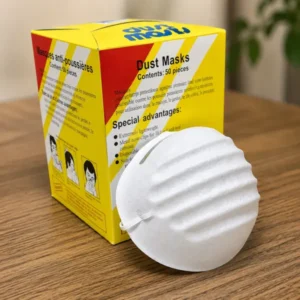
Disposable Respirator in Kenya
Original price was: KSh1,200.KSh900Current price is: KSh900. + VATOrder via WhatsApp -
Bulk Dust Masks in Kenya, Respiratory Equipment, Safety Equipment Suppliers In Kenya, Safety Items
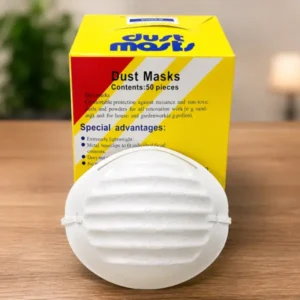
Quality Taiwan Disposable Dust Masks
Original price was: KSh1,250.KSh1,050Current price is: KSh1,050. + VATOrder via WhatsApp -
Bulk Dust Masks in Kenya, Respiratory Equipment, Safety Equipment Suppliers In Kenya, Safety Items
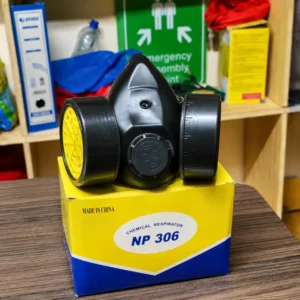
Reusable Respirator in Kenya
Original price was: KSh800.KSh500Current price is: KSh500. + VATOrder via WhatsApp -
Bulk Dust Masks in Kenya, Respiratory Equipment, Safety Equipment Suppliers In Kenya, Safety Items
Taiwan Disposable Dust Masks Kenya
Original price was: KSh1,200.KSh900Current price is: KSh900. + VATOrder via WhatsApp -
Bulk Dust Masks in Kenya, Eye and Face Protection, Safety Equipment Suppliers In Kenya, Safety Items
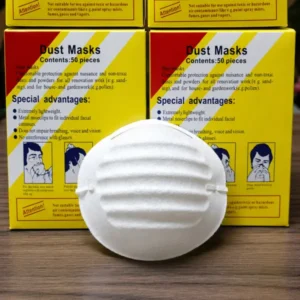
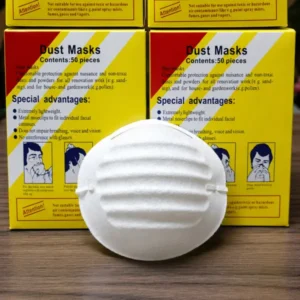
Yellow Box Disposable Dust Masks
Original price was: KSh1,500.KSh900Current price is: KSh900. + VATOrder via WhatsApp


Key Features of N95 Respirators
Product construction varies between models. Procurement teams should review the manufacturer’s specification before purchase.
Filtering Facepiece Construction
The filtration material forms part of the respirator itself, removing the need to install separate particulate filters.
Close Facial Fit
N95 respirators are designed to fit closely around the nose, cheeks and chin when the correct model and size are selected.
Adjustable Nose Section
Many models include a mouldable nose clip that assists the wearer in achieving a closer fit around the bridge of the nose.
Head-Strap Design
N95 respirators commonly use head straps intended to hold the facepiece securely in position during use.
Valved or Non-Valved Options
Available models may include an exhalation valve or a non-valved facepiece, depending on the required workplace application.
Disposable Format
N95 respirators have a limited service life and should be replaced according to their condition, exposure and manufacturer guidance.
Where N95 Respirators May Be Used
The selected respirator must be suitable for the identified particulate hazard, exposure concentration and workplace conditions.
Construction
For approved drilling, cutting, sanding, cement handling and site-cleaning activities involving airborne particles.
Manufacturing
For selected production, processing, packaging and maintenance operations involving suitable particulate hazards.
Warehousing
For approved storage, stock handling, packaging and housekeeping activities in dusty work environments.
Woodworking
For selected cutting, shaping, drilling and sanding operations involving airborne wood particles.
Facility Maintenance
For suitable cleaning, surface preparation, repair and maintenance tasks that generate airborne particulate matter.
Institutional Procurement
For approved respiratory protection requirements in schools, laboratories, healthcare facilities and public institutions.
N95 Respirators vs General Dust Masks
The terms N95 respirator and dust mask should not be used interchangeably without reviewing the product specification.
N95 Respirators
An N95 respirator is manufactured and tested according to the requirements of the applicable N95 classification.
- Designed as a tight-fitting filtering facepiece
- Carries the applicable N95 product marking
- Relies on an effective facial seal
- Requires correct fitting and user seal checks
- Intended for approved particulate applications
General Dust Masks
The term dust mask may refer to a variety of disposable products with different construction, filtration and performance levels.
- May be intended for nuisance dust only
- May not carry an N95 classification
- Performance varies between products
- May have different fitting characteristics
- Requires specification review before procurement
Valved vs Non-Valved N95 Respirators
The appropriate configuration depends on the workplace environment, comfort requirements and organisational safety procedures.
Valved N95 Respirators
A valved respirator includes an exhalation valve designed to allow exhaled air to leave the facepiece more directly.
- May reduce heat accumulation inside the respirator
- May improve comfort during demanding physical work
- Must be checked for valve damage or contamination
- May not be suitable where source control is required
- Must remain approved for the intended application
Non-Valved N95 Respirators
A non-valved respirator filters air through the facepiece during both inhalation and exhalation.
- Does not contain a separate exhalation valve
- Suitable for applications requiring a non-valved design
- Available in cup-shaped and flat-fold formats
- Requires correct positioning and facial fit
- Must be replaced when damaged or unsuitable
How to Select N95 Respirators
Product selection should be guided by a workplace risk assessment, exposure requirements and the manufacturer’s technical information.
1. Identify the Hazard
Confirm the airborne contaminant, particle type, expected concentration and duration of exposure.
2. Confirm N95 Suitability
Establish whether an N95 filtering facepiece is appropriate for the identified hazard and working conditions.
3. Verify Product Markings
Review the respirator markings, manufacturer information, packaging and supporting documentation.
4. Select the Configuration
Determine whether the requirement is for a cup-shaped, flat-fold, valved or non-valved respirator.
5. Confirm Facial Fit
Ensure that the selected model and size can form an effective seal on the intended wearers.
6. Calculate Quantities
Consider employee numbers, shifts, replacement frequency, project duration and contingency stock.
What to Check Before Purchasing N95 Respirators
Procurement teams should review the product and supporting documentation before approving an N95 respirator order.
Product Marking
Check that the respirator carries clear manufacturer, model and classification information.
Packaging Information
Review the packaging for product identification, quantity, instructions, storage requirements and relevant dates.
Manufacturer Details
Confirm that the product identifies the responsible manufacturer and provides sufficient technical information.
Model Consistency
Confirm that the model shown on the respirator corresponds with the model listed on the packaging and documentation.
Required Certification
Request relevant product documentation when your organisation requires evidence of a specific filtration classification.
Supplier Quotation
Ensure the quotation clearly identifies the product description, specification, quantity, commercial terms and delivery period.
How to Wear an N95 Respirator
Employees should follow the fitting procedure supplied by the manufacturer of the selected respirator.
Inspect Before Use
Examine the facepiece, straps, nose clip and valve, where fitted, for damage or contamination.
Position the Respirator
Place the respirator over the nose and mouth with the lower edge positioned securely beneath the chin.
Arrange the Head Straps
Position the straps according to the manufacturer’s instructions without twisting or incorrectly placing them.
Shape the Nose Clip
Use both hands to mould the nose clip around the bridge of the nose where an adjustable clip is provided.
Complete a User Seal Check
Perform the manufacturer’s prescribed seal check before entering the designated work area.
Reposition When Necessary
Do not enter the work area if the respirator cannot form an appropriate seal after adjustment.
When to Replace an N95 Respirator
Disposable respirators should be replaced in accordance with workplace procedures and the manufacturer’s instructions.
Damaged Facepiece
Replace the respirator if it becomes torn, punctured, crushed, distorted or otherwise physically damaged.
Damaged Straps
Broken, loose or overstretched straps may prevent the respirator from maintaining an effective facial seal.
Moisture or Contamination
Replace respirators that become wet, visibly soiled, contaminated or heavily loaded with particulate matter.
Breathing Resistance
Replace the respirator when breathing through the filtering material becomes noticeably more difficult.
Inadequate Seal
Stop using the respirator when it can no longer remain correctly positioned or pass the required user seal check.
Workplace Procedure
Follow the organisation’s replacement and disposal requirements for the specific task and contaminant.
Bulk N95 Respirator Procurement
Bansi Suppliers supports planned respiratory protection procurement for organisations, contractors and project teams.
Construction Companies
Request filtering facepiece respirators for qualifying site tasks, maintenance personnel and project teams.
Factories and Warehouses
Procure suitable respiratory protection for production, stores, maintenance and housekeeping departments.
Healthcare and Laboratories
Submit the required product specification, model and institutional documentation requirements for quotation.
Schools and Institutions
Arrange supply for maintenance departments, technical facilities, laboratories and approved institutional applications.
Facial Hair Can Affect Respirator Fit
N95 respirators rely on direct contact between the sealing surface and the wearer’s face.
Facial hair, jewellery, head coverings and other obstructions crossing the sealing area may prevent an effective seal.
N95 Respirators Do Not Supply Oxygen
N95 filtering facepieces filter surrounding air but do not provide an independent source of breathable oxygen.
They must not be used in oxygen-deficient environments, unknown atmospheres or conditions immediately dangerous to life or health.
Compare Additional Respirator Options
Select respiratory protection according to the identified hazard, required facial coverage and filtration method.
Disposable Respirators
Explore disposable filtering facepieces and general workplace dust masks.
View disposable respiratorsReusable Respirators
Compare reusable facepieces with replaceable filters and cartridges.
View reusable respiratorsChemical Respirators
Respirator systems for approved gas, vapour and chemical applications.
View chemical respiratorsRespiratory Equipment
Explore the wider respiratory protection range available from Bansi Suppliers.
View respiratory equipmentYour N95 Respirator Supplier in Kenya
We support procurement teams, contractors, institutions and businesses with professional respiratory protection supply services.
Professional Quotations
Submit your required specification, quantity and delivery details for a structured commercial quotation.
Product Specification Support
Provide your required classification and workplace application so available options can be reviewed.
Corporate Documentation
Request the commercial documentation required by your procurement, accounts and project-management teams.
Kenya-Wide Delivery
Arrange delivery to offices, institutions, warehouses, factories and project locations across Kenya.
N95 Respirator Questions
Where can I buy N95 respirators in Kenya?
Bansi Suppliers supports corporate and institutional procurement of N95 and other disposable respiratory protection products. Contact our team with your required model, quantity and delivery details.
Are all disposable dust masks N95 respirators?
No. Disposable masks are produced to different specifications and filtration classifications. Confirm that the product is clearly identified as N95 when that classification is required.
Can an N95 respirator protect against chemical gases?
Standard N95 particulate respirators are not designed to provide protection against chemical gases or vapours. A suitable reusable respirator and compatible chemical cartridge may be required.
Can N95 respirators be purchased in bulk?
Yes. Provide the required specification, total quantity, workplace application and delivery location for a commercial quotation.
How often should an N95 respirator be replaced?
Replacement depends on the product condition, exposure, moisture, contamination, breathing resistance and manufacturer guidance.
Does an N95 respirator require fit testing?
Tight-fitting respirators rely on an effective facial seal. Workplace respiratory protection programmes should address appropriate fit testing, user instruction and seal checks.
Request an N95 Respirator Quotation
Send us your required product specification, quantity, workplace application and delivery location. Our procurement team will provide available options and commercial pricing.