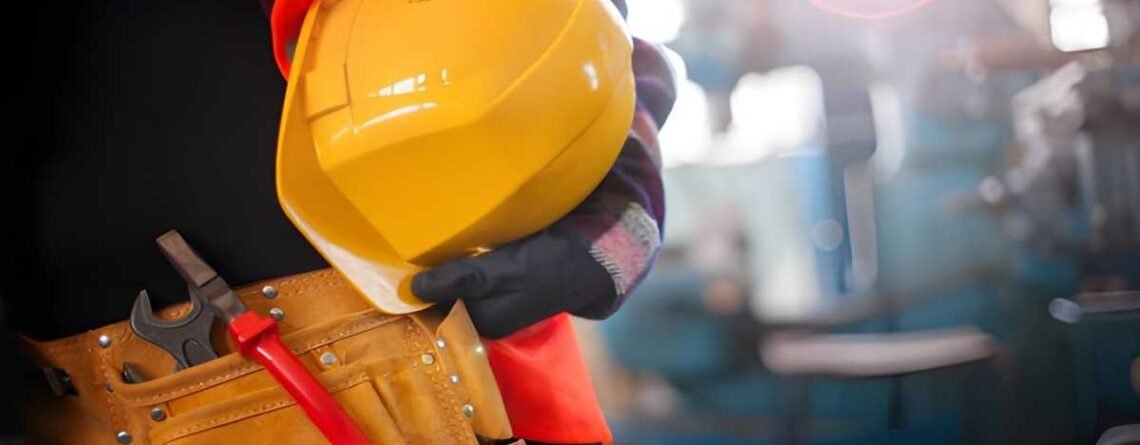
The head is one of the most sensitive areas of the human body, and trauma to it may be fatal. The use of safety helmets is essential in the construction, mining, manufacturing, and warehousing industries to cushion employees against falling objects, electric shocks, and accidental bumps.
Not every helmet is created equally. In 2025, the designs of the advanced helmets will be more comfortable and durable, which implies that they will be able to wear them during long working days without feeling discomfort. As a safety officer, employer, or procurement manager, you must be aware of the types of safety helmets and how to choose the right one for your job site is essential.
Bansi Suppliers offers certified helmets, which follow the standards set out by the industry, giving you confidence in the safety of the workers.
The Importance of Safety Helmets at the Workplace
A safety helmet is more than just head protection. It ensures:
- Protection from falling objects in construction and warehouse environments.
- Electrical resistance in power-related industries.
- Visibility and worker identification through color-coded helmets.
- Confidence and productivity for workers who feel safe.
By putting on the right helmet, you are protecting yourself and your business against workplace harm and ensuring your business is up to date with safety rules.
Types of Safety Helmets
1. Industrial Safety Helmets (Hard Hats)
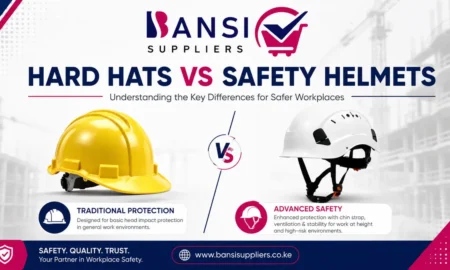
The most common type of helmets is these, which are used in construction and industrial environments. They guard against falling objects, collisions, and penetration injuries.
Subtypes include:
- Type I Helmets – Protect against impacts from above.
- Type II Helmets – Offer protection against both top and lateral impacts.
2. Electrical Safety Helmets
These non-conductive insulated insulation tested helmets are specifically made to suit electricians and workers who come into contact with electrical hazards.
Classes include:
- Class E (Electrical): Tested up to 20,000 volts.
- Class G (General): Tested up to 2,200 volts.
- Class C (Conductive): No electrical protection, suitable for low-risk environments.
3. Climbing and Height Work Helmets
Work at Height Helmets used by workers operating on top of heights, like tower climbers or scaffolders, must have chin straps to ensure that they are not thrown off. These helmets are powerful, but lightweight, and provide impact protection and stability.
4. Welding Helmets
Special helmets that shield employees against sparks, heat, and UV radiation. In modern welding helmets, auto-darkening filters may be included such that these auto-darkening filters adjust to bright light.
5. High-Visibility Helmets
To work in the dark or close to the roads, reflective or brightly colored helmets enhance visibility and minimize accidents. They are mainly used with reflective jackets to improve this.
How to Choose the Right Safety Helmet
In choosing a safety helmet to use at your workplace, the following factors should be taken into consideration:
1. Work Environment
- Construction sites → Industrial safety helmets
- Electrical projects → Class E electrical helmets
- Welding → Specialized welding helmets
- Working at heights → Helmets with chin straps
2. Standards and Certification
Ensure helmets comply with safety standards such as:
- ANSI/ISEA Z89.1 (USA)
- EN 397 (Europe)
- ISI/BIS (India)
In Bansi Suppliers, our helmets are all obtained from certified manufacturers.
3. Comfort and Fit
A helmet should be long shift-friendly. Find headbands that can be adjusted, have ventilation holes, and soft materials.
4. Durability and Material
Select helmets that are constructed out of HDPE (High-Density Polyethylene) or ABS (Acrylonitrile Butadiene Styrene) to be strong and resistant to impact.
5. Maintenance and Replacement
The cracks, dents, or fading on the helmet should be checked on a regular basis. You should change the helmets after 23 years (even when no apparent damage is seen).
Color Codes of Safety Helmets on Job Sites
Various colors of helmets are common symbols of different places in workplaces. For example:
- White – Engineers, managers, supervisors
- Yellow – General laborers and earth-moving operators
- Blue – Carpenters, electricians, and technical workers
- Green – Safety officers
- Red – Firefighters or emergency staff
- Orange/Reflective – Road crews and high-visibility roles
This system assists in the simple identification and improves coordination at the workplace.
Why Choose Bansi Suppliers for Safety Helmets?
We have learned at Bansi Suppliers that each work environment is different. This is the reason why we maintain a large selection of helmets- basic hard hats, special electrical helmets, and welding headgear. Our products are:
- Certified for safety compliance
- Available in bulk for large job sites
- Affordable without compromising quality
We also provide custom helmet branding so companies can print logos or safety reminders directly on their helmets.
Conclusion
In dangerous workplaces, the proper safety helmet will save lives. From industrial hard hats to electrical helmets and specialized welding tools, all helmets have a particular purpose.
Consider the certification, comfort, and durability of your helmet when selecting your helmet for your job site in 2025. Collaborate with a reputable supplier such as Bansi Suppliers to make sure that your staff has the finest head protection.