PPE Supply Contract Kenya – Recurring, Scheduled & Corporate Safety Equipment Supply
Bansi Suppliers supports companies, contractors, factories, warehouses, institutions and project organizations looking to structure ongoing PPE and workplace safety equipment procurement.
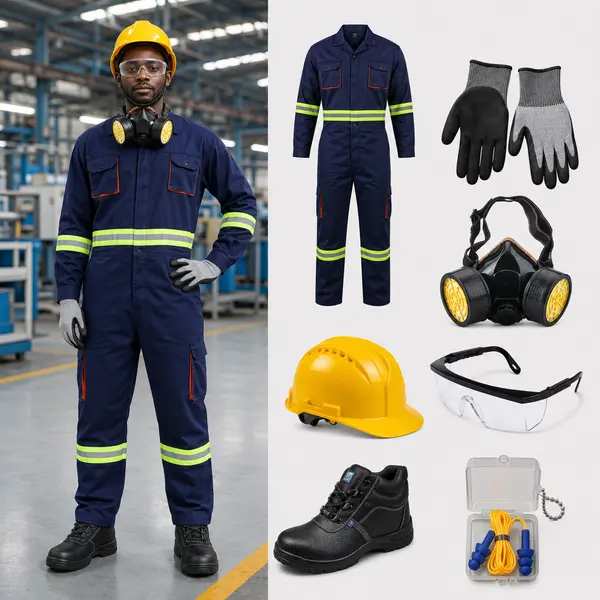
Contract-based supply arrangements can be discussed for recurring requirements involving safety boots, helmets, gloves, reflective wear, protective clothing, respirators, gumboots, eye and hearing protection, fall-protection equipment and other workplace safety products.
Supply arrangements depend on the agreed product scope, specifications, quantities, ordering process, delivery requirements and commercial terms.
PPE Categories for Contract & Recurring Supply
Build your contract requirement around the actual PPE used by your workforce, including exact specifications, employee sizes, quantities and replenishment requirements.
Safety Boots & Protective Footwear
Safety Gloves
Reflective Jackets & Visibility Wear
Corporate PPE Supply Contracts for Ongoing Requirements
Organizations with active operations may purchase the same categories of PPE repeatedly throughout the year.
Rather than restarting the sourcing process every time a department needs replacement footwear, gloves, workwear or other PPE, procurement teams may choose to establish an agreed supply arrangement.
A well-structured PPE supply contract can define the products, specifications, ordering process, delivery locations, documentation and commercial terms that apply during the agreed period.
Recurring PPE Supply
Organize repeat requirements for PPE consumed, replaced or issued during ongoing operations.
Multi-Department Supply
Separate PPE requirements for production, maintenance, warehouse, cleaning and other teams.
Multi-Site Supply
Structure procurement across several branches, factories, warehouses or project locations.
Project Supply
Organize recurring PPE requirements throughout an active project.
Scheduled Requirements
Planned purchasing schedules can be discussed where requirements are known in advance.
Call-Off Requirements
Where commercially agreed, organizations can discuss ordering against an agreed product schedule as needs arise.
A PPE Supply Contract Should Define the Actual Agreement
A supply contract should not automatically be interpreted as a guarantee that every product will remain continuously available, that prices will never change, or that unlimited quantities can be supplied immediately.
Product availability, lead requirements, pricing arrangements, delivery obligations and ordering procedures should be clearly agreed between the parties.
When Does a PPE Supply Contract Make Sense?
Large Workforces
Organizations regularly issuing PPE to substantial employee teams.
Frequent PPE Consumption
Operations using products that require regular replenishment.
Multiple Branches
Companies sourcing similar PPE for several operating locations.
Long-Term Projects
Construction or engineering projects requiring PPE throughout their duration.
Standardized PPE
Organizations using defined PPE specifications across selected employee roles.
Planned Procurement
Procurement teams seeking better visibility over recurring PPE requirements.
PPE Supply Arrangements Can Be Structured in Different Ways
The appropriate arrangement depends on the organization's purchasing process and actual PPE usage.
Scheduled Supply
Defined products and quantities supplied according to an agreed purchasing schedule.
Call-Off Supply
Orders placed against an agreed product schedule as operational needs arise, where commercially agreed.
Project-Based Supply
PPE supplied according to the phases and workforce requirements of a project.
Department-Based Supply
Separate product schedules for different departments or employee roles.
Multi-Site Supply
Quantities and destinations organized across several operating locations.
Framework-Style Procurement
A defined product and purchasing structure for repeat requirements, subject to agreed terms.
PPE Categories for Contract Supply
Build your contract schedule from the workplace PPE categories your organization actually uses.
Safety Boots
Protective footwear according to workplace requirements and sizes.
Safety Boots →Safety Helmets
Head protection where identified hazards require appropriate helmets.
Safety Helmets →Safety Gloves
Hand protection according to tasks, materials and workplace hazards.
Safety Gloves →Reflective Wear
Visibility clothing where operational conditions indicate a requirement.
Reflective Wear →Protective Clothing
Overalls, workwear and specialist garments according to requirements.
Protective Clothing →Respiratory Protection
Respirators selected according to the identified airborne hazard.
Respirators →Eye & Face Protection
Safety glasses, goggles and suitable face protection by hazard.
Eye Protection →Hearing Protection
Hearing PPE according to workplace noise assessment and fit.
Hearing Protection →Safety Gumboots
Workplace footwear for suitable wet, agricultural and industrial tasks.
Gumboots →Chemical PPE
Specialist PPE selected according to exact chemicals and exposure conditions.
Chemical PPE →Fall Protection
Height-safety equipment forming part of complete fall-protection systems.
Fall Protection →First Aid Kits
Workplace first aid requirements according to organizational needs.
First Aid Kits →Define the Exact PPE Specification Before Contracting Supply
A recurring supply arrangement works better when both buyer and supplier clearly understand what product is required.
Generic descriptions such as “safety boots,” “gloves,” “helmet” or “mask” may not be detailed enough for a contract product schedule.
What Should a Contract PPE Specification Include?
Product Description
Clearly identify the required PPE item.
Material
Include required material where it is important to product selection.
Protective Features
State exact required characteristics where applicable.
Size Range
Include expected footwear, glove and garment sizes.
Required Standard
Where an exact standard is required, identify it within the specification.
Unit of Supply
Clearly define whether purchasing is by piece, pair, pack, box or carton.
Specialist PPE Should Remain Hazard-Specific
A supply contract does not make one PPE product suitable for every workplace hazard.
Chemical PPE should match the exact substance and exposure. Respiratory protection should match the identified contaminant. Fall-protection equipment should form part of a complete height-safety system.
If operating conditions change, PPE suitability may need to be reassessed rather than automatically continuing with the previous specification.
Manage Employee Sizes Within the PPE Supply Schedule
Total quantity alone may not be enough for footwear, workwear and other sized PPE.
Safety Boot Sizes
Break quantities down according to workforce footwear sizes.
Workwear Sizes
Separate garment quantities by the required size range.
Glove Sizes
Where applicable, include the required glove-size distribution.
Define the Unit of Measure in the Supply Contract
A piece, pair, pack, box, set and carton can represent very different quantities.
Agreeing the correct unit prevents repeated disputes when purchase orders and invoices are prepared.
Piece
One individual product unit.
Pair
Relevant for suitable boots, gloves and paired products.
Pack
Define exactly how many individual products form the pack.
Box
Confirm the quantity contained in each box.
Set
Define the products or components forming the complete set.
Carton
Confirm the number of pieces, packs or boxes per carton.
Estimate Your Recurring PPE Requirements
Historical consumption information can help procurement teams prepare more realistic purchasing schedules.
Previous Consumption
Review how much PPE each department has historically used.
Employee Numbers
Consider workforce changes, new employees and project mobilization.
Operational Changes
Account for new projects, departments, branches or work activities.
Do Not Use One Replacement Interval for Every PPE Product
PPE replacement depends on product type, condition, use, contamination, damage, workplace procedure and manufacturer guidance.
A supply contract can support recurring procurement, but it should not create an arbitrary universal replacement date for every PPE item.
PPE Supply Contracts for Companies with Multiple Sites
Organizations operating several locations can organize requirements centrally while identifying quantities for each delivery destination.
Head Office
Central procurement and contract management.
Factories
PPE requirements separated by facility and department.
Warehouses
Separate requirements for logistics and distribution sites.
Branches
Allocate products and quantities by branch location.
Project Sites
PPE requirements for active construction or engineering projects.
Remote Operations
Include destination information when discussing supply arrangements.
Define Delivery Requirements Before the Contract Starts
Delivery arrangements can be coordinated according to product availability, quantity, destination and agreed transport arrangements.
Where several destinations, phased deliveries or scheduled requirements are involved, include those details within the procurement specification.
Single-Site Delivery
Requirements directed to one agreed business location.
Multiple Destinations
Quantities allocated to several branches or operating sites.
Phased Delivery
Delivery requirements separated according to agreed project phases.
Project Mobilization
Initial PPE requirements associated with project commencement.
Replenishment Orders
Additional requirements submitted according to agreed ordering procedures.
Branch Allocation
Separate quantities according to each operating location.
Define How Pricing Will Be Managed
PPE supply contracts should clearly state the commercial arrangement applying to the selected products.
Do not assume that an open-ended contract automatically guarantees permanently fixed pricing regardless of product, supplier or market changes.
Product Schedule
Define products covered by the commercial arrangement.
Unit Pricing
Ensure the unit of supply is clearly identified.
Review Mechanism
Where applicable, state how commercial changes will be handled.
Product Substitutions Should Not Be Automatic
If a contracted PPE product becomes unavailable, a visually similar replacement should not automatically be treated as technically equivalent.
Any proposed alternative should be reviewed against the agreed specification, intended use and required supporting documentation.
Build a Clear PPE Contract Ordering Process
Authorized Request
Define who can submit purchasing requirements within the organization.
Product Reference
Use agreed descriptions, codes or specifications.
Required Quantity
State the quantity and correct purchasing unit.
Size Breakdown
Include footwear and garment size distributions where relevant.
Destination
Identify the branch, warehouse, factory or project location.
Purchase Authorization
Follow the organization's agreed purchasing and authorization process.
Can LPO Purchasing Be Used Within a PPE Supply Arrangement?
LPO-based purchasing can be supported for qualifying business and institutional orders subject to verification and agreed commercial terms.
Where LPOs form part of the agreed procurement process, product descriptions, quantities and units should match the confirmed commercial arrangement.
Purchase Order + Delivery Note + Invoice Should Match
Corporate procurement teams should check that product descriptions, quantities, units and agreed commercial information remain consistent through the purchasing process.
Differences, shortages, substitutions or returns should be reflected appropriately within the applicable documentation.
PPE Supply Contracts Across Key Industries
Construction
Recurring PPE requirements for contractors and project teams.
Construction PPE →Manufacturing
PPE for production, engineering, maintenance and factory teams.
Manufacturing PPE →Warehousing & Logistics
Ongoing PPE for loading, storage, dispatch and logistics teams.
Warehouse PPE →Agriculture & Flower Farms
Recurring PPE for field, greenhouse, spraying and packhouse operations.
Agricultural PPE →Food Processing
PPE for production, sanitation, packing and maintenance teams.
Food Processing PPE →Cleaning Companies
Recurring gloves, footwear, workwear and task-specific PPE.
Cleaning PPE →Hotels & Hospitality
PPE requirements for housekeeping, maintenance and facility teams.
Hotel PPE →Healthcare
Workplace PPE according to intended use and exact specifications.
Healthcare PPE →Schools & Institutions
PPE requirements for laboratories, workshops, cleaning and maintenance.
Institutional PPE →Security Companies
Recurring workwear, visibility garments, footwear and site-specific PPE.
Security PPE →What to Include in a PPE Supply Contract RFQ
Product Schedule
List all PPE products expected within the arrangement.
Technical Specifications
Include exact product and performance requirements where applicable.
Estimated Quantities
Provide expected purchasing volumes where available.
Size Requirements
Include expected footwear and garment size ranges.
Ordering Process
Explain how your organization intends to issue individual requirements.
Delivery Locations
Identify branches, sites or projects requiring supply.
Requested Contract Period
State the expected commercial period for discussion.
Documentation Requirements
Include any product or procurement documentation required by your organization.
Commercial Requirements
Include relevant tender, RFQ or purchasing conditions.
How to Start a PPE Supply Contract Discussion
1. Submit Your Product List
Provide the expected PPE product range.
2. Add Specifications
Include required product characteristics and standards where applicable.
3. Estimate Requirements
Share expected quantities or historical consumption where available.
4. Define Locations
Identify all branches, factories, warehouses or project sites.
5. Define Purchasing Process
Explain RFQ, LPO, call-off or other procurement procedures.
6. Review Commercial Terms
Agree the applicable commercial and supply arrangements before commencement.
Already Have a PPE Schedule, RFQ or Excel Procurement List?
Send the complete requirement with product descriptions, specifications, estimated quantities, sizes, delivery locations and recurring procurement information.
PPE Supply Contract vs One-Off PPE Order
One-Off PPE Order
Suitable where the organization has a specific immediate requirement that does not necessarily repeat regularly.
Submit the product list, sizes and quantities for normal quotation.
PPE Supply Contract
Suitable for organizations expecting repeat requirements over an agreed commercial period.
Product specifications, ordering procedures, delivery arrangements and commercial terms can be structured in advance.
Is Your PPE Supply Contract Being Procured Through a Tender?
Where an organization is running a formal tender or framework procurement process, submit the complete tender schedule, product specifications, estimated quantities and contractual requirements.
Corporate Procurement Documentation
Formal Quotations
Structured quotations can be prepared against submitted procurement requirements.
LPO-Based Purchasing
LPO-based purchasing can be supported for qualifying business and institutional orders subject to verification and agreed commercial terms.
VAT Documentation
VAT invoice documentation is available for applicable business transactions.
Related Corporate PPE Procurement Solutions
PPE Procurement Supplier
RFQ, BOQ and structured company PPE procurement.
PPE Procurement →Corporate PPE Supplier
PPE supply for companies, organizations and project teams.
Corporate PPE →Bulk PPE Suppliers
Larger workplace PPE requirements and workforce quantities.
Bulk PPE →PPE Tender Supplier
Tender, BOQ and bid-related PPE quotation support.
PPE Tender Supply →PPE Supplier Accepting LPO
LPO-based purchasing for qualifying organizations.
LPO PPE Supply →PPE Suppliers Kenya
Main commercial PPE supplier hub.
PPE Suppliers Kenya →PPE Contract Supply Through Bansi Suppliers
Bansi Suppliers supports corporate procurement teams consolidating recurring workplace safety requirements.
Multi-Category Procurement
Consolidate several PPE categories within one commercial requirement.
Structured Specifications
Define products and technical requirements in advance.
Recurring Requirements
Discuss supply arrangements for ongoing PPE purchasing.
Multi-Site Requirements
Structure supply across branches, workplaces and projects.
Corporate Documentation
Support structured business purchasing and applicable VAT documentation.
Delivery Coordination
Delivery arrangements can be coordinated according to product availability, quantity, destination and agreed transport arrangements.
PPE Supply Contract Kenya – Frequently Asked Questions
Can Bansi Suppliers discuss PPE supply contracts?
Yes. Contract-based supply arrangements can be discussed according to products, quantities, locations and commercial requirements.
What is a PPE supply contract?
It is an agreed commercial arrangement covering recurring PPE supply over a defined scope or period.
Who needs a PPE supply contract?
It may suit organizations with recurring PPE requirements, larger workforces, multiple sites or long-term projects.
Can several PPE categories be included?
Yes. A schedule may include footwear, gloves, helmets, workwear and other workplace safety products.
Can safety boots be included?
Yes. Include required specifications, sizes and expected quantities.
Can safety gloves be included?
Yes. Define the glove type, task, sizes and product requirements.
Can safety helmets be included?
Yes. Include the required helmet specification and expected quantities.
Can respirators be included?
Yes. Respiratory equipment should match the actual airborne hazard and exposure.
Can chemical PPE be included?
Yes. The exact chemical, concentration, task and exposure should be provided.
Can work-at-height PPE be included?
Yes. The required components should form part of a suitable complete fall-protection approach.
Does a supply contract guarantee unlimited stock?
No. Product availability and supply arrangements should be agreed explicitly.
Does a supply contract guarantee permanently fixed prices?
Not automatically. Pricing arrangements and any applicable review mechanism should be agreed commercially.
Can we provide estimated annual quantities?
Yes. Estimated consumption can help define the expected procurement scope.
Can employee sizes be included?
Yes. Footwear, garment and glove size ranges can be included where relevant.
Can multiple sites be included?
Yes. Quantities and destinations can be separated by location.
Can project sites be included?
Yes. Project locations and anticipated requirements can form part of the procurement schedule.
Can we submit an RFQ for a PPE supply contract?
Yes. Include the product schedule, specifications, estimated quantities, locations and commercial requirements.
Can we submit an Excel PPE schedule?
Yes. Spreadsheet-based schedules are useful for large multi-item requirements.
Can PPE tenders lead to supply contracts?
Where an organization follows a formal tender process, submit the tender requirements for quotation review.
Can LPO-based purchasing be supported?
LPO-based purchasing can be supported for qualifying business and institutional orders subject to verification and agreed commercial terms.
Can PPE be supplied on a scheduled basis?
Scheduled requirements can be discussed where quantities and delivery arrangements are commercially agreed.
Can we place call-off requirements?
Call-off-style purchasing can be discussed where it forms part of the agreed commercial arrangement.
Can alternative PPE be supplied if a product becomes unavailable?
Alternatives should be reviewed against the agreed specification rather than substituted automatically.
Can delivery be coordinated across Kenya?
Delivery arrangements can be coordinated according to product availability, quantity, destination and agreed transport arrangements.
How do we start a PPE supply contract discussion?
Submit your PPE schedule, specifications, estimated quantities, sizes, locations and procurement requirements for review.
Discuss a PPE Supply Contract for Your Organization
Send your PPE schedule, RFQ, BOQ or Excel procurement list with product specifications, estimated quantities, employee sizes, delivery locations and recurring procurement requirements.
Contract-based supply arrangements can then be reviewed according to the required scope and agreed commercial terms.
Source. Supply. Succeed.