How to Choose the Right Safety Boots for Your Workplace in Kenya
Choosing the right safety boots in Kenya is essential for protecting employees against workplace hazards.
For procurement officers, safety managers and contractors, footwear selection should begin with a workplace risk assessment rather than price or brand preference.
Construction sites, manufacturing plants, warehouses and engineering workshops may require different protective features.
This guide explains how to choose safety boots in Kenya based on hazards, safety standards, employee fit and corporate procurement requirements.
Bansi Suppliers supports companies sourcing industrial safety footwear for workforce deployment, project requirements and repeat PPE orders.
Explore our Safety Boots Suppliers Kenya page for corporate footwear supply.
1. Identify Workplace Hazards Before Selecting Safety Boots
The first step is understanding what could injure an employee’s feet.
Different workplace hazards require different protective properties.
Common risks include:
- Falling objects: May require impact-resistant toe protection.
- Heavy equipment: May require toe compression protection.
- Sharp objects: May require penetration-resistant midsoles.
- Slippery surfaces: Require suitable tested slip resistance.
- Wet conditions: May require water-resistant or waterproof footwear.
- Chemical exposure: Requires footwear compatible with the substances involved.
- Electrical hazards: Require appropriately specified electrical protective footwear.
A standard steel toe boot may not protect against every workplace hazard.
For example, steel toe protection does not automatically establish waterproofing, chemical resistance or electrical insulation.
Procurement tip: Record the hazards associated with each job before selecting the footwear specification.
2. Understand Safety Boots Standards and Protection Ratings
Safety footwear should meet the standards applicable to the workplace.
One commonly referenced international standard is EN ISO 20345.
It addresses safety footwear requirements, including protective toe caps, with additional properties identified through relevant classifications and markings.
When reviewing a safety boot, consider:
- Toe impact and compression protection
- Penetration resistance
- Slip resistance
- Outsole performance
- Water-related properties
- Electrical properties
- Required protective classifications
Safety boot markings and test documentation should be checked for the exact product supplied.
Are All Steel Toe Boots EN ISO 20345 Certified?
No. A steel toe cap alone does not establish compliance with the entire standard.
Companies should request suitable documentation when certification forms part of a tender, workplace policy or procurement specification.
Also, do not assume that an older manufacturer’s reference establishes compliance with a newer edition of a standard.
3. Choose the Right Type of Safety Footwear
Different footwear types are suited to different workplace requirements.
Steel Toe Safety Boots
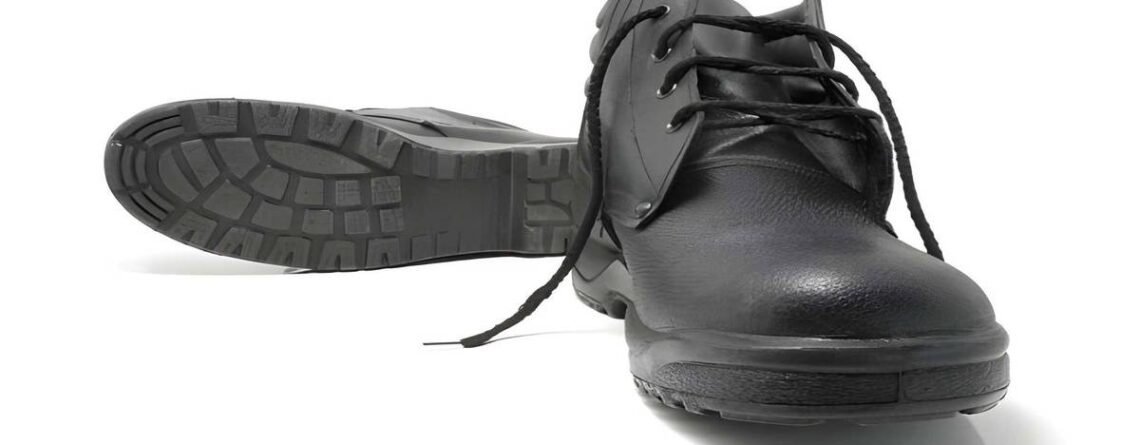
Steel toe boots provide specified toe protection against impact and compression hazards.
They may be considered for construction, engineering, manufacturing and material-handling operations.
Bansi Suppliers supplies industrial models such as:
Ultimate Plus Industrial Steel Toe Safety Boots
Both reviewed models have manufacturer-stated 200J steel toe protection.
However, the required specification should still match your workplace assessment.
Penetration-Resistant Safety Boots
Where sharp objects are present underfoot, a protective midsole may be required.
These hazards can occur in construction sites, workshops, fabrication areas and certain industrial environments.
Check the documented penetration-resistance performance before approving the model.
Waterproof Safety Footwear
Workers operating in consistently wet environments may require waterproof footwear.
Examples include selected outdoor, agricultural, utility and washdown tasks.
Do not assume a leather safety boot is waterproof unless the exact model has supporting documentation.
Safety Shoes
Some workplaces use lower-cut protective safety shoes rather than high-ankle boots.
These may be considered for selected indoor duties where their protective characteristics meet the workplace requirements.
Footwear height alone does not establish the level of protection.
Chemical-Protective Footwear
Chemical-handling environments may require specialized boots.
Select these products using chemical compatibility information, exposure conditions and the applicable protective standards.
Ordinary industrial safety boots should not automatically be treated as chemical-protective footwear.
Explore the wider Foot Protection Equipment category for available footwear types.
4. Consider Comfort, Fit and Daily Workplace Use
Correct fit matters when employees wear safety footwear throughout the working day.
Poorly fitted footwear may cause discomfort, interfere with movement and reduce acceptance of PPE.
Before ordering, evaluate:
- Correct foot size
- Sufficient toe room
- Secure heel positioning
- Suitable fastening
- Internal footbed
- Employee work socks
- Walking and standing requirements
- Workplace surfaces
- Shift duration
Why Heel Energy Absorption Matters
Some safety boots include tested heel energy absorption features.
For example, the supplied Vaultex and Ultimate Plus manufacturer datasheets state heel energy absorption above 20 joules.
This is a useful technical characteristic, but it does not guarantee comfort for every worker.
Employee Size Verification
For corporate orders, collect employee sizes before purchasing.
Where practicable, allow employees to confirm fit before large-scale deployment.
A size schedule helps reduce ordering errors and supports replacement planning.
5. Match Safety Boots to Your Industry
Different industries may require different footwear specifications.
Construction Safety Boots
Construction environments may involve falling materials, tools, sharp objects and uneven surfaces.
Important considerations may include toe protection, protective midsoles, outsole suitability and fit.
Visit Construction PPE Kenya for wider site protection requirements.
Manufacturing Safety Boots
Factories may have different hazards across production, maintenance and warehouse departments.
For example, some workstations may involve machinery and material handling. Others may involve specific chemicals or wet floors.
Select footwear based on each task rather than assuming every employee needs the same boot.
Explore Manufacturing PPE Supply.
Warehouse and Logistics Safety Boots
Warehouse workers may spend long periods walking, handling goods and working around loading equipment.
Consider toe protection, appropriate slip resistance, fit and employee movement.
Visit Warehouse and Logistics PPE.
Engineering and Maintenance Safety Boots
Engineering and maintenance employees may encounter heavy components, machinery, sharp objects and contaminated surfaces.
The footwear specification should reflect the actual work.
Specialized electrical, chemical or thermal hazards may require footwear different from ordinary steel toe boots.
6. Compare Safety Boot Brands Using Verified Specifications
Brand reputation can help buyers identify products to evaluate, but it should not replace a technical assessment.
Two industrial footwear brands available from Bansi Suppliers are Vaultex and Ultimate Plus.
The supplied manufacturer datasheets show the following features for the reviewed models:
| Feature | Vaultex | Ultimate Plus |
|---|---|---|
| Upper material | Buffalo leather | Buffalo leather |
| Toe impact protection | 200J | 200J |
| Toe compression protection | 15,000N | 11,000N |
| Protective midsole | Steel | Steel |
| Stated penetration resistance | Above 1,100N | Above 1,000N |
| Outsole | Dual-density PU/PU | Dual-density PU/PU |
| Heel energy absorption | Above 20J | Above 20J |
| Antistatic properties | Manufacturer-stated | Manufacturer-stated |
These figures reflect the manufacturer information supplied for the reviewed models.
They do not establish that one brand is universally safer, more comfortable or longer-lasting.
Companies should verify the relevant technical documentation and ensure the selected boot meets their workplace requirements.
For a detailed comparison, read our Vaultex vs Ultimate Plus Safety Boots Kenya guide.
7. Consider Price, Replacement Costs and Procurement Value
Price matters when buying protective footwear for employees.
However, the cheapest safety boot is not automatically the best choice.
Likewise, a more expensive boot is not necessarily safer or more durable.
Evaluate:
- Required protective performance
- Actual product specification
- Employee fit
- Purchase price
- Delivery requirements
- Expected usage conditions
- Inspection and replacement needs
- Supplier quotation terms
Avoid Unverified Durability Claims
Footwear service life varies according to working conditions, frequency of use, maintenance and exposure to hazards.
Without comparable test data, it is not appropriate to claim that one brand will always last longer than another.
For corporate pricing information, visit Safety Boots Price in Kenya.
8. Prepare a Safety Boots Procurement Schedule
Companies purchasing boots for multiple employees should prepare a clear procurement request.
Include:
- Required safety boot model or specification
- Total number of pairs
- Quantity per employee size
- Workplace or department
- Required safety standard
- Delivery location
- Required delivery date
Where available, attach your RFQ, BOQ or Excel purchasing schedule.
This allows the supplier to prepare a quotation based on the actual requirements.
For larger quantities, explore Wholesale Safety Boots Kenya.
You can also upload your procurement list for review.
Common Mistakes When Choosing Safety Boots
Avoid these purchasing mistakes:
- Choosing footwear solely by price.
- Assuming every steel toe boot offers the same protection.
- Ignoring workplace hazards.
- Buying without checking employee sizes.
- Assuming waterproof or chemical-resistant properties without evidence.
- Treating antistatic footwear as electrically insulating.
- Overlooking applicable standards and certifications.
- Assuming one footwear model suits every department.
A properly documented selection process helps procurement teams make more informed decisions.
Safety Boots Procurement Checklist
Before approving safety footwear, confirm:
-
Workplace hazards have been identified.
-
Toe protection requirements are clear.
-
Penetration resistance has been assessed.
-
Suitable slip resistance has been considered.
-
Water, chemical and electrical requirements have been verified where applicable.
-
The relevant safety standard has been checked.
-
Employee sizes are confirmed.
-
Quantities are available for each size.
-
Delivery requirements are established.
-
A replacement and inspection process is in place.
Frequently Asked Questions
What are the best safety boots for construction work in Kenya?
The best choice depends on workplace hazards, required protection and employee fit. Construction sites may require specified toe protection, protective midsoles and suitable outsole performance.
Are all steel toe safety boots waterproof?
No. Steel toe protection and waterproof performance are separate footwear properties.
What is the difference between safety boots and ordinary work boots?
Safety boots are generally selected for documented protective features, such as tested toe impact protection. Ordinary work boots may not provide the same verified protection.
Which is better: Vaultex or Ultimate Plus safety boots?
Neither is universally better. Compare their documented specifications against the workplace requirements.
What safety standard should I check?
EN ISO 20345 is a commonly referenced safety-footwear standard. Confirm the applicable edition, required classification and supporting documentation for the exact model.
Can companies order safety boots in bulk?
Yes. Bansi Suppliers supports corporate quotations based on employee sizes, quantities, technical specifications and delivery needs.
Choose the Right Safety Boots with Bansi Suppliers
Selecting the right safety boots begins with understanding the workplace, not simply choosing a familiar brand.
Identify hazards, confirm technical specifications and ensure employees receive correctly fitted footwear.
Bansi Suppliers supports safety footwear procurement for construction companies, manufacturers, warehouses, engineering firms, institutions and industrial contractors.
Explore our Safety Boots Suppliers Kenya page for available corporate footwear solutions.
For company requirements, request a formal quotation or upload your procurement list.
Call/WhatsApp: 0722 353 974
Bansi Suppliers — Source. Supply. Succeed.