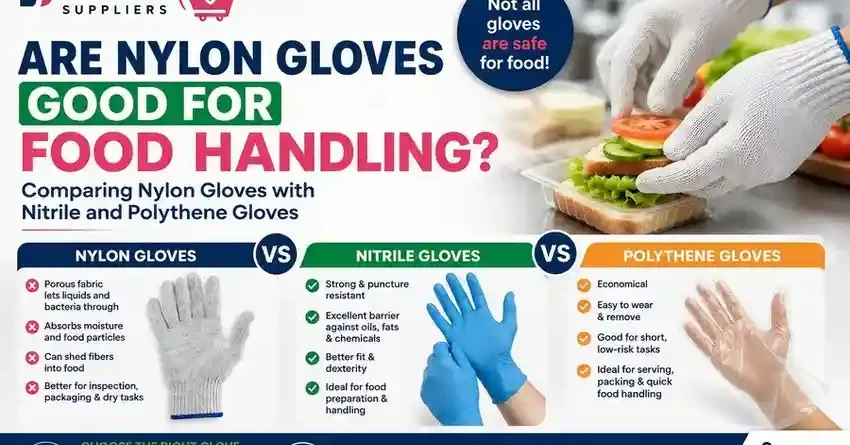
Many food businesses ask: “Is nylon gloves good for food handling?”
The practical answer is:
Ordinary uncoated nylon gloves are generally not the best choice for direct contact with exposed food. They are more commonly suited to dry inspection, handling packaging materials, sorting products and other light-duty tasks.
For direct food preparation, businesses will usually get better hygiene control from purpose-selected nitrile food-handling gloves or disposable polythene gloves, depending on the task.
However, nylon material alone does not automatically make a glove unsuitable. Some specially manufactured nylon-based gloves may be approved for food handling. The buyer must check the specification of the finished glove rather than relying only on its material or appearance.
Quick Answer: Can Nylon Gloves Be Used for Food Handling?
Nylon gloves may be used in a food facility for tasks such as:
- Handling sealed packages
- Sorting cartons
- Inspecting packaging
- Moving clean containers
- Light warehouse work
- Dry product inspection
- Handling non-food-contact materials
They should not automatically be approved for handling exposed food, wet ingredients, meat, fish, vegetables or ready-to-eat products.
Food-service gloves are treated as food-contact surfaces, so the finished product must be suitable for its intended food-contact application.
For direct food handling, consider:
- Nitrile food-handling gloves for preparation, processing and tasks requiring better dexterity
- Polythene gloves for brief, light-duty tasks requiring frequent glove changes
What Are Nylon Gloves?
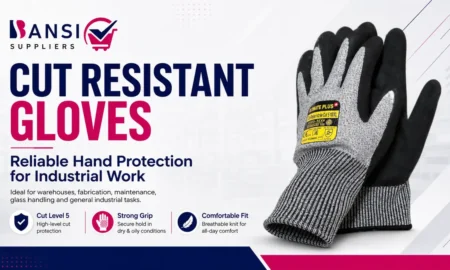
Nylon gloves are usually knitted textile gloves designed to provide comfort, flexibility and finger movement during light work.
They are commonly used for:
- Product inspection
- Packaging
- Sorting
- Assembly
- Warehouse handling
- Electronics work
- General light-duty applications
Manufacturers commonly position uncoated nylon gloves as breathable, lightweight inspection or industrial gloves. That construction is useful for dry handling and dexterity, but it should not be treated as a continuous liquid barrier against food juices, wash water, oil or other wet substances. This is an inference from their open knitted construction and intended light-duty uses.
Why Ordinary Nylon Gloves Are Usually Not Ideal for Direct Food Handling
They Are Not Automatically Food Grade
A glove being clean, white or made from nylon does not prove that it is suitable for food contact.
Food businesses should confirm:
- Intended use
- Food-contact documentation
- Glove construction
- Coating material, where applicable
- Cleaning instructions
- Whether the product is reusable
- Suitable food types
- Limitations of use
Health and safety guidance recommends selecting gloves that meet the standards required for the task, including food-grade requirements where applicable.
They May Not Provide a Continuous Liquid Barrier
An ordinary knitted nylon glove contains spaces between the knitted fibres. This makes it breathable, but it also means it should not be relied upon as a continuous barrier during wet food preparation.
It may therefore be unsuitable for tasks involving:
- Raw meat juices
- Fish handling
- Wet vegetables
- Oils and fats
- Sauces
- Washing produce
- Moist dough
- Cleaning chemicals
Reusable Gloves Require Strict Hygiene Controls
Many nylon gloves are reusable. A reusable glove can transfer contamination when it is:
- Used for several unrelated tasks
- Worn in different departments
- Stored while dirty
- Shared between workers
- Used for raw food and then ready-to-eat food
- Not cleaned and dried correctly
- Reissued without inspection
International food-hygiene guidance states that where gloves are worn, measures must be taken to ensure they do not become a source of contamination.
Fibres and Food Residue Can Become Difficult to Control
A worn textile glove may trap food residue within its knitted construction. Damaged gloves may also develop loose fibres.
For this reason, an ordinary nylon inspection glove should not be selected for exposed food simply because it appears clean.
Are All Nylon Gloves Unsuitable for Food Handling?
No.
Some nylon-based gloves are manufactured specifically for food handling or packaging and may have documented food-contact compliance.
For example, manufacturers offer certain nylon or nylon-blend protective gloves made from food-compliant materials. This demonstrates why buyers must evaluate the finished glove, not reject or approve it based on the word “nylon” alone.
The correct buying question is therefore not:
Is the glove made from nylon?
It is:
Is this specific finished glove documented as suitable for the intended food-contact task?
Nylon Gloves vs Nitrile Food-Handling Gloves
For many direct food-preparation and food-processing duties, nitrile gloves are a more practical option than ordinary nylon gloves.
Nitrile Gloves Provide a Continuous Disposable Barrier
Nitrile food-handling gloves are generally designed as continuous disposable gloves rather than knitted textile gloves.
They may be suitable for tasks involving:
- Food preparation
- Portioning
- Meat and fish handling
- Fruit and vegetable processing
- Bakery preparation
- Handling oily ingredients
- Food packing
- Catering operations
- Commercial kitchen work
Buyers should still confirm that the specific product is suitable for food contact.
Nitrile Gloves Generally Offer Better Dexterity for Detailed Work
A properly sized nitrile glove normally fits more closely around the fingers than a knitted nylon inspection glove.
This can help during:
- Cutting ingredients
- Measuring portions
- Decorating cakes
- Handling small food items
- Packing delicate products
- Preparing sandwiches
- Working with production tools
Glove-selection guidance recommends balancing fit, dexterity and protection, particularly where wet or oily materials require secure handling. (HSE)
Nitrile Gloves Are Easier to Replace Between Tasks
Disposable nitrile gloves can be removed and replaced when workers change duties.
This supports hygiene controls when moving between:
- Raw and cooked food
- Different food products
- Preparation and cleaning
- Waste handling and food preparation
- Different production zones
The FDA Food Code recommends that single-use gloves be used for only one task and discarded when damaged, soiled or when work is interrupted.
Explore nitrile food-handling gloves in Kenya for food-processing, hospitality and catering teams.
Nylon Gloves vs Polythene Gloves
Polythene gloves are another option for food businesses, particularly where tasks are brief and gloves must be changed regularly.
Polythene Gloves Suit Short Tasks
Polythene gloves may be considered for:
- Serving bread or pastries
- Making simple sandwiches
- Handling dry ready-to-eat food
- Food sampling
- Packing lightweight products
- Short counter-service tasks
- Handling one food item before changing gloves
Their loose-fitting design makes them easy to put on and remove.
Nylon Gloves May Suit Packaging and Inspection
Ordinary nylon gloves may be more useful for:
- Handling sealed food packages
- Moving cartons
- Inspecting bottles and containers
- Sorting packaging materials
- Dry warehouse duties
- Light equipment handling
Therefore, nylon and polythene gloves should not necessarily be treated as substitutes.
The correct choice depends on whether the worker is touching exposed food or handling the packaging around it.
View disposable polythene gloves for short-duration food-service and handling tasks.
Nitrile, Polythene and Nylon Gloves: Quick Comparison
| Selection factor | Nitrile food-handling gloves | Polythene gloves | Ordinary nylon gloves |
|---|---|---|---|
| Typical construction | Continuous disposable glove | Loose disposable glove | Knitted reusable textile |
| Direct food contact | Suitable when documented | Suitable when documented | Not automatically suitable |
| Fit | Close-fitting | Loose-fitting | Flexible knitted fit |
| Dexterity | Generally high | Limited | Good for dry inspection |
| Wet food handling | Often more practical | Limited for prolonged wet work | Generally not recommended without a suitable coating and approval |
| Frequent glove changes | Suitable | Very practical | Requires cleaning if reused |
| Detailed preparation | Good | Limited | Not usually intended for direct food preparation |
| Packaging work | Suitable | Suitable for light tasks | Often useful for dry packaging |
| Typical cost | Higher per glove | Lower per glove | Reusable, depending on product |
| Hygiene control | Discard between incompatible tasks | Easy to replace frequently | Requires controlled washing, storage and task allocation |
Product performance varies. Always confirm the exact glove’s intended use and manufacturer information.
Which Glove Is Best for Different Food Tasks?
Ready-to-Eat Food
For salads, sandwiches, cooked foods, bakery products and other foods that will not receive a further cooking step, use suitable utensils or properly selected single-use gloves.
Food-safety guidance identifies single-use gloves, tongs and other utensils as barriers that help prevent bare-hand contact with ready-to-eat food.
Recommended option: Suitable nitrile or polythene food-contact gloves.
Meat and Fish Processing
Workers may need a glove that supports grip and remains secure during wet handling.
Recommended option: Suitable nitrile food-handling gloves.
Disposable nitrile gloves do not replace cut-resistant gloves where knives, blades or sharp bones are involved.
Bakeries
Different bakery duties may require different gloves.
Use nitrile gloves for:
- Decorating cakes
- Handling wet fillings
- Portioning ingredients
- Preparing dough
- Detailed packing
Use polythene gloves for:
- Briefly serving bread
- Picking up pastries
- Food sampling
- Simple counter-service duties
Nylon gloves may be useful for handling cartons, trays and sealed packages, provided they are kept separate from direct food-contact work.
Hotels and Restaurants
Commercial kitchens may use nitrile gloves for preparation and polythene gloves for brief service duties.
Ordinary nylon gloves may be assigned to:
- Stores
- Dispatch
- Packaged-goods handling
- Dry inspection work
Food Factories
Food factories should allocate gloves by department and task instead of issuing one glove type throughout the facility.
A practical approach may be:
| Department | Suggested glove |
|---|---|
| Food preparation | Food-contact nitrile gloves |
| Wet product handling | Suitable nitrile gloves |
| Short serving tasks | Polythene gloves |
| Food sampling | Polythene gloves |
| Dry packaging inspection | Suitable nylon gloves |
| Carton handling | Nylon or coated handling gloves |
| Cleaning and sanitation | Separate cleaning gloves |
| Knife work | Suitable cut-resistant glove system |
Do Gloves Replace Handwashing?
No.
Gloves can become contaminated in the same way as bare hands. Workers should wash and dry their hands before putting on gloves and after removing them.
Handwashing is still important because contaminated hands can transfer microorganisms to the inside or outside of gloves. The FDA Food Code identifies proper handwashing and prevention of bare-hand contact with ready-to-eat foods as important food-safety controls. (U.S. Food and Drug Administration)
Workers should change gloves after touching:
- Raw food
- Waste bins
- Mobile phones
- Money
- Cleaning equipment
- Door handles
- Their face or hair
- Dirty packaging
- Contaminated surfaces
When Should Food-Handling Gloves Be Changed?
Single-use nitrile and polythene gloves should be replaced:
- When torn
- When punctured
- When visibly dirty
- When contaminated
- After handling raw food
- Before handling ready-to-eat food
- After touching waste
- After performing cleaning duties
- When changing workstations
- After leaving and returning to the task
- When work is interrupted
They should not be washed and reused.
Single-use gloves are intended for one task and should be discarded when damaged, soiled or after an interruption in the operation. (U.S. Food and Drug Administration)
Food-Handling Glove Buying Checklist
Before ordering gloves, ask:
- Will the glove touch exposed food?
- Is the finished glove documented for food contact?
- Is the food wet, oily or dry?
- Is the task brief or continuous?
- Does the worker need precise finger movement?
- How frequently must gloves be changed?
- Is the glove disposable or reusable?
- Are several sizes available?
- Is textured grip required?
- Will the worker handle raw or ready-to-eat food?
- Does the task involve blades or sharp materials?
- Is the glove being used for cleaning?
- How will reusable gloves be cleaned and stored?
- Are different gloves required for different departments?
- What quantity is required per shift?
Final Verdict: Are Nylon Gloves Good for Food Handling?
Ordinary uncoated nylon gloves are not usually the best option for direct handling of exposed food.
They are better suited to dry inspection, packaged-product handling, sorting and light warehouse duties.
For direct food preparation:
- Choose nitrile food-handling gloves when workers need better dexterity, closer fit and more controlled handling.
- Choose polythene gloves for short, simple tasks requiring frequent glove changes.
- Use nylon gloves for direct food contact only when the specific finished glove has suitable food-contact documentation.
The correct solution is often to assign different glove types to different departments rather than purchasing one general glove for every employee.
Buy Food-Handling Gloves in Kenya
Bansi Suppliers provides gloves for restaurants, hotels, bakeries, catering companies, food factories, supermarkets, institutional kitchens and food-packaging operations.
Explore:
Both products are listed in the Bansi Suppliers online catalogue for company and procurement requirements. (Bansi Suppliers)
Contact Bansi Suppliers for product information, box or carton quantities, bulk pricing and formal quotation support.
📞 0722 353 974
🌐 www.bansisuppliers.co.ke
Source. Supply. Succeed.
Frequently Asked Questions
Is nylon gloves good for food handling?
Ordinary nylon gloves are generally better suited to inspection, packaging and dry handling. Use them for direct food contact only when the specific product is documented as food-contact suitable.
Are nylon gloves food grade?
Nylon material alone does not prove that a glove is food grade. Check the finished glove’s intended use and supporting documentation.
Can nylon gloves be used in a bakery?
They may be used for handling trays, cartons, packaging and sealed products. Direct contact with bread or pastries requires a glove approved for the intended food-contact task.
Which gloves are best for food preparation?
Suitable nitrile food-handling gloves are often a practical option for preparation tasks requiring close fit, dexterity and controlled handling.
Are polythene gloves suitable for food handling?
They may be suitable for brief, light-duty food handling when the finished product is intended for food contact.
Are nitrile gloves better than nylon gloves?
For direct food preparation and suitable wet handling, nitrile gloves generally provide a more practical disposable barrier. Nylon gloves may be better for dry inspection and packaged-product handling.
Can nylon gloves be reused?
Many nylon gloves are reusable, but they require controlled cleaning, drying, inspection, storage and task allocation.
Do food workers still need to wash their hands?
Yes. Gloves do not replace proper handwashing.n Kenya.