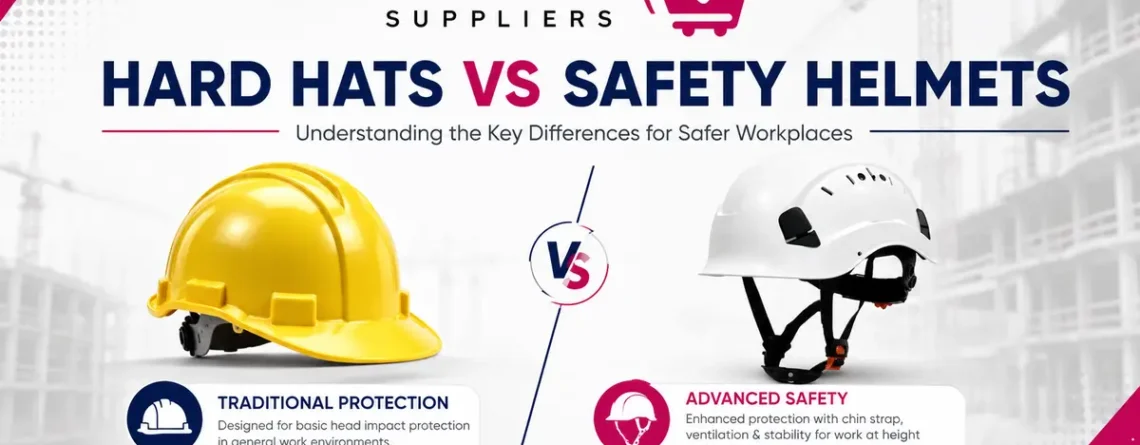
Many buyers searching for hard hats vs safety helmets in Kenya want to
understand whether the two terms mean the same thing and which option is best for their
workplace. In many construction and industrial settings, people use the words hard hats and
safety helmets interchangeably. Both refer to head protection PPE used to reduce the risk of
head injuries from falling objects, impact hazards and overhead workplace risks.
At Bansi Suppliers, we supply
safety helmets in Kenya
for construction companies, contractors, factories, warehouses, roadwork teams, engineering
firms, institutions and corporate procurement departments. Whether your team calls them hard hats
or safety helmets, the most important thing is choosing the right head protection for the actual
workplace risk.
What Is a Hard Hat?
A hard hat is a protective helmet commonly worn on construction sites, industrial worksites,
warehouses and other areas where head protection is required. The term “hard hat” is widely used
in construction and is often associated with site helmets used by workers, engineers,
supervisors, visitors and contractors.
Hard hats are designed to help protect the head from certain impact risks, falling objects,
low-hanging structures and other site hazards. They are commonly used by builders, site workers,
electricians, plumbers, welders, engineers, machine operators and project visitors.
What Is a Safety Helmet?
A safety helmet is the broader term for protective headgear used in workplaces. Safety helmets
may include general construction helmets, industrial helmets, work-at-height helmets and other
specialized head protection options. In many cases, a hard hat is simply one type of safety
helmet used for worksite protection.
Safety helmets are used across construction, manufacturing, warehousing, telecom, engineering,
roadwork, maintenance and industrial operations. The right helmet depends on the workplace
hazard, comfort needs and application.
Are Hard Hats and Safety Helmets the Same?
In everyday use, many buyers use the terms hard hat and safety helmet to mean the same thing.
However, in procurement and safety planning, it is better to look beyond the name and focus on
the helmet’s intended use, fit, comfort, adjustment system, chin strap requirement, standard,
durability and workplace suitability.
For example, a standard hard hat may be suitable for general construction work, while a more
secure work-at-height helmet may be better for roofing, scaffolding, climbing or telecom tower
work. This means the best choice depends on the job, not just the name.
Hard Hats for Construction Sites in Kenya
Construction sites are the most common places where hard hats are used. Workers may be exposed
to falling tools, concrete particles, timber, steel bars, roofing sheets, scaffolding components
and other site materials. A hard hat helps reduce exposure to head injury risks and supports
safer site operations.
Contractors, developers and site managers should provide suitable helmets for workers,
engineers, supervisors and visitors entering active areas. For a detailed construction buying
guide, read
Construction Safety Helmets in Kenya.
Safety Helmets for Industrial Workplaces
Industrial workplaces such as factories, warehouses, production areas and workshops may also
require safety helmets. Workers may face risks from overhead racks, moving loads, machinery,
maintenance work, tools and storage areas. In these environments, helmets should be comfortable
enough for longer shifts and suitable for the worksite risk.
For factories, warehouses and industrial buyers, read our guide on
Industrial Safety Helmets in Kenya.
Work at Height Helmets vs Ordinary Hard Hats
One key difference buyers should understand is between ordinary hard hats and work-at-height
helmets. Workers involved in roofing, scaffolding, telecom work, tower climbing, elevated
maintenance and rescue support may need helmets that fit more securely. A chin strap or better
retention system may be required depending on the task.
A standard hard hat may be suitable for general ground-level construction use, but it may not be
ideal for workers operating above ground level. For height-related tasks, visit our guide on
Work at Height Safety Helmet Kenya.
Helmet Colours for Hard Hats and Safety Helmets
Both hard hats and safety helmets are available in different colours. Companies often use helmet
colours to identify worker roles, departments, supervisors, engineers, visitors, safety officers
or emergency teams. This helps improve site organization and communication.
Colour meanings may vary from company to company, so every workplace should define its own
helmet colour system clearly. To learn more, read our blog on
Safety Helmet Colours Meaning in Kenya.
Safety Helmet Price in Kenya
Many buyers compare safety helmet price in Kenya when choosing between hard
hats and safety helmets. Prices may vary depending on helmet type, quality, adjustment system,
brand, colour, chin strap, certification, branding and order quantity. Basic helmets may cost
less, while specialized helmets may cost more.
Companies should compare value, not only the lowest price. A good helmet should match the
workplace hazard, fit properly and remain comfortable enough for workers to wear correctly. For
pricing guidance, visit our page on
Safety Helmet Price in Kenya.
Branded Hard Hats and Safety Helmets
Companies may also choose branded hard hats or branded safety helmets for site identity and
professional appearance. Logo-printed helmets help workers, supervisors and contractors look more
organized and can make company teams easier to identify on project sites.
For branding guidance, visit
Branded Safety Helmets in Kenya.
Which One Should Your Company Buy?
Your company should choose based on the work environment. For general construction or industrial
use, standard safety helmets or hard hats may be suitable. For work at height, roofing,
scaffolding or telecom work, a more secure helmet may be required. For corporate presentation,
branded or colour-coded helmets may be useful.
Before placing an order, consider:
- Work environment: construction, warehouse, factory, telecom, roofing or maintenance.
- Hazard level: falling objects, impact risks, overhead structures or height work.
- Helmet fit: secure adjustment and worker comfort.
- Colour needs: role identification and site organization.
- Branding: company logo or project identity.
- Quantity: single purchase or bulk corporate supply.
Bulk Hard Hats and Safety Helmets in Kenya
Companies, contractors, institutions, factories and project teams often require helmets in bulk.
Bulk buying helps maintain consistent PPE across teams and makes procurement easier for
construction and industrial operations. Bansi Suppliers supports RFQs, VAT invoices, repeat
orders and delivery planning for corporate buyers.
For larger orders, visit our page on
Safety Helmets Bulk Supply Kenya.
Where to Buy Hard Hats and Safety Helmets in Nairobi
If you are looking for where to buy hard hats or safety helmets in Nairobi, Bansi Suppliers can
support your sourcing needs. Nairobi has many construction companies, warehouses, factories,
engineering firms and institutions that require dependable head protection PPE.
For local buying guidance, visit our article on
Where to Buy Safety Helmets in Nairobi.
Why Buy from Bansi Suppliers?
Bansi Suppliers focuses on corporate procurement support for Kenyan businesses. We understand
that companies need clear quotations, reliable communication, product guidance, VAT invoices,
repeat order support and dependable delivery planning. Whether you call them hard hats or safety
helmets, our team can help your business source suitable head protection for workers and sites.
We support construction companies, factories, warehouses, engineering firms, contractors,
institutions, safety officers and procurement departments with safety helmets and related PPE.
Final Thoughts
Hard hats and safety helmets are closely related terms, and many buyers use them to mean the
same thing. The most important factor is choosing the correct helmet for the task. Consider the
work environment, risk level, comfort, adjustment, colour, branding and whether the work involves
height-related activities.
Browse our
Safety Helmet Kenya
category or compare costs on our
Safety Helmet Price in Kenya
page. For quotations, call or WhatsApp Bansi Suppliers on
0722 353 974
or email
procurement@bansisuppliers.co.ke.