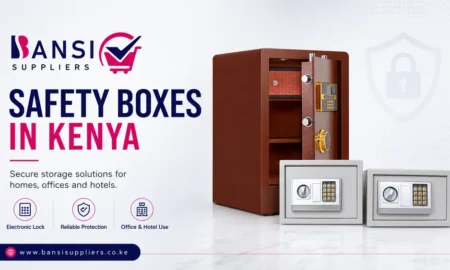
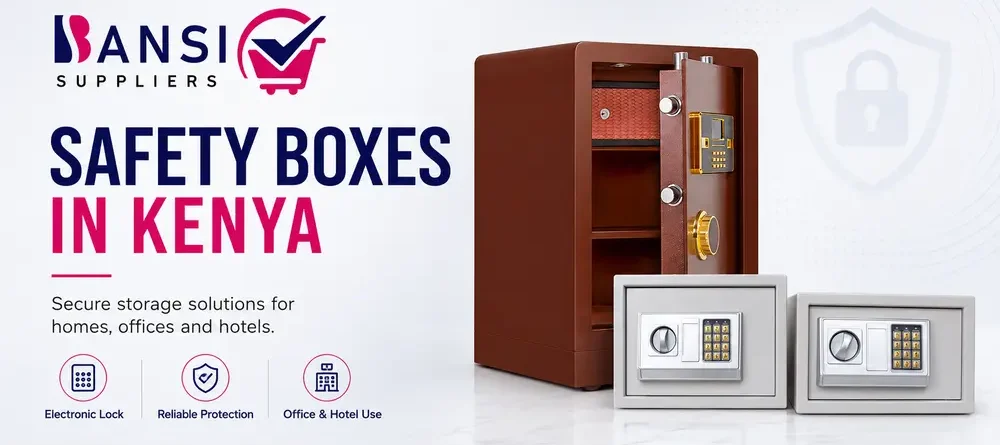
Choosing the best safe box in Kenya should start with your actual storage requirement, not simply the price, size or appearance of the safe.
A safe used at home for passports and certificates may require very different features from one used by a finance department for petty cash, company stamps and confidential business records.
Before comparing products, determine:
- What you need to store
- How much internal space you need
- Who needs access
- How often the safe will be opened
- Preferred locking system
- Installation location
- Whether wall or floor mounting is required
- Whether documented fire resistance is required
You can also browse Safe Boxes in Kenya to compare currently available products.
1. Start With What You Need to Store
The contents should determine the safe rather than the other way around.
Start by listing everything that needs to go inside.
For personal use, this may include:
- Passports
- Birth certificates
- Academic certificates
- Title deeds
- Insurance documents
- Jewellery
- Cash
- Important keys
- Property records
Businesses may require secure storage for:
- Petty cash
- Company stamps
- Cheque books
- Contracts
- Business licences
- Restricted keys
- Confidential documents
- Selected finance records
If you are selecting a safe specifically for workplace use, see our Office Safe Box in Kenya guide.
2. Check the Internal Capacity
One of the most common mistakes when buying a safe is choosing according to external appearance.
A safe may look large on the outside but provide less usable space than expected because of the thickness of the door, walls and internal construction.
Before buying, check:
- Internal width
- Internal height
- Internal depth
- Shelf arrangement
- Door opening
- Number of compartments
If you need to store A4 files, document folders or envelopes without folding them, measure those items first.
The important question is:
Will the items I actually need to store fit comfortably inside?
3. Allow Space for Future Requirements
Avoid buying a safe that only just accommodates today’s contents.
Documents and records can increase over time.
A small safe may be suitable for passports, certificates, jewellery and limited cash. Larger requirements may include folders, business records, company documents and items used by several departments.
Where practical, allow reasonable additional capacity for future storage.
4. Choose the Right Locking System
Safe boxes can use different locking methods.
Common options include:
- Traditional key locks
- Digital keypads
- Electronic locks
- Combination systems
- Biometric access
- Multiple-access systems
The right option depends on who needs access and how frequently the safe will be used.
Key-Lock Safes
Key-operated safes provide a straightforward access method.
They may work well where a limited number of trusted people control access.
However, you should have a clear plan for:
- Primary key storage
- Spare keys
- Authorised key holders
- Lost-key procedures
- Access when staff responsibilities change
Digital Safe Boxes
Digital safes normally use an electronic keypad, PIN or another electronic access method depending on the model.
They may suit homes, offices, hotels and businesses where authorised users require regular access.
Before buying a digital safe, check:
- How the code is programmed
- Whether the code can be changed
- Battery requirements
- Low-battery indication
- Backup opening method
- Reset procedure
For more detail, see our Digital Safe Box in Kenya guide.
Biometric Safes
Some electronic safe boxes use fingerprint access.
If considering one, check:
- Number of fingerprints supported
- Backup opening method
- Battery requirements
- Reset procedure
- Whether keypad access is also available
- Exact manufacturer specification
Do not assume every electronic safe includes biometric functionality.
5. Check What Happens If the Battery Fails
This is particularly important when buying a digital or biometric safe.
Depending on the model, backup access may involve:
- An override key
- External emergency power
- Another manufacturer-designed access method
Always check the instructions for the exact model before purchasing.
If a backup key is provided, storing it inside the same safe defeats its purpose.
6. Decide Who Should Have Access
A home safe used by one person has different access requirements from an office safe used by several employees.
Before buying, ask:
- Who should have access?
- Who controls the key or code?
- Who can change the access code?
- Who holds backup access?
- What happens when an employee changes roles or leaves?
- How often will the safe be opened?
For businesses, remember that a safe is only one part of access control. Internal procedures are also important.
7. Plan the Installation Location
Decide where the safe will be placed before ordering it.
Consider:
- Available floor or shelf space
- Door clearance
- Nearby furniture
- Accessibility
- Safe weight
- Delivery route
- Stair or lift access
- Mounting requirements
- Access to the lock or keypad
This is especially important for larger or heavier safes.
Planning the final location before delivery can prevent unnecessary handling problems later.
8. Check Whether the Safe Can Be Mounted
Some safe-box designs provide mounting points for attachment to a floor, wall or suitable structure.
If mounting is important, confirm:
- Whether the model supports mounting
- Recommended fixing method
- Suitable installation surface
- Manufacturer installation instructions
Do not assume every safe can be anchored in the same way.
Avoid drilling or modifying the safe without checking the recommended installation procedure.
9. Do Not Judge Security by Weight Alone
Weight can be useful when comparing safe boxes, particularly for delivery and installation planning.
However, a heavier safe is not automatically more secure.
Review the complete product specification, including:
- Construction
- Door design
- Locking system
- Installation
- Mounting provisions
- Manufacturer information
- Applicable security rating where provided
Choose according to the actual requirement rather than weight alone.
10. Understand Fire Resistance
Many buyers search for a “fireproof safe box,” but this term needs careful interpretation.
A steel safe is not automatically fire resistant.
If fire protection is important, look for documented manufacturer information such as:
- Fire-resistance rating
- Applicable test standard
- Protection duration
- Temperature conditions
- Intended contents
- Exact model covered by the rating
For a detailed explanation, read our Fireproof Safe Box in Kenya guide.
11. Fire Resistance and Physical Security Are Different
Fire resistance and physical security should not be treated as the same feature.
Fire resistance concerns how the safe performs under stated fire and heat conditions.
Physical security relates to factors such as construction, locking systems, installation and security testing where applicable.
If both requirements are important, verify both separately.
12. Consider What You Are Protecting From Heat
Paper documents and electronic media can have different protection requirements.
Paper Documents
Examples include:
- Certificates
- Contracts
- Title deeds
- Licences
- Insurance documents
If fire protection is required, confirm that the stated protection is appropriate for paper documents.
Electronic Media
Examples can include:
- USB drives
- External drives
- Other digital storage devices
Do not assume that a safe intended to protect paper documents is automatically suitable for electronic media.
Check the manufacturer’s specification for the exact model and intended contents.
13. Choose According to How the Safe Will Be Used
Different environments can require different specifications.
Home Use
Home users may require secure storage for passports, certificates, title deeds, jewellery, cash and personal documents.
A compact safe may be sufficient where storage requirements are limited.
Office Use
Businesses may require safes for petty cash, company stamps, contracts, keys, cheque books and confidential documents.
Office buyers should pay particular attention to access control, internal capacity and how frequently the safe will be opened.
For workplace requirements, see Office Safe Boxes in Kenya.
Hotels and Serviced Apartments
Hotels may require compact electronic safes for guest rooms or larger safes for administration.
Where guest access is involved, check code-reset procedures, backup access and authorised management procedures.
Shops and Cash-Handling Businesses
Retail businesses may require controlled storage for cash, receipts, keys and selected business records.
Consider cash volume, access frequency, authorised users and the operating procedure before choosing a model.
14. Safe Box vs Office Cabinet
Not every document requires safe-level storage.
A safe box may be more appropriate for:
- Cash
- Cheque books
- Company stamps
- Restricted keys
- Important contracts
- Confidential documents
- Selected valuables
An office cabinet may be more appropriate for:
- Routine files
- General records
- Stationery
- Office supplies
- Everyday documents
For ordinary workplace filing and storage, browse our Office Cabinets category.
15. Compare Prices After Defining Your Requirements
Price should come after identifying the specification you need.
Safe-box prices can vary according to:
- Size
- Internal capacity
- Construction
- Locking system
- Weight
- Internal configuration
- Electronic features
- Documented protection features
- Quantity required
A cheaper safe is not automatically unsuitable, and a more expensive safe is not automatically right for your requirement.
Compare products with similar specifications.
For price-focused research, use our Safe Box Price in Kenya guide.
16. Check the Exact Product Specification Before Ordering
Before completing your purchase, verify the individual model.
Check:
- External dimensions
- Internal dimensions
- Locking method
- Backup access
- Battery requirements where applicable
- Product weight
- Shelves and compartments
- Mounting provisions
- Fire-resistance information where required
- Security rating where provided
- Warranty information where applicable
Do not assume two safes from the same manufacturer have identical specifications.
17. Consider Delivery Before Buying a Large Safe
Large and heavy safe boxes need more delivery planning than compact models.
Before ordering, consider:
- Delivery address
- Floor level
- Lift availability
- Stair access
- Door width
- Corridor dimensions
- Final installation location
Providing this information when requesting a quotation can help clarify delivery requirements before the safe arrives.
18. Buying Safe Boxes for Several Branches
Companies with several locations may benefit from consolidating their requirement.
Prepare a schedule showing:
- Branch or location
- Quantity
- Required safe size
- Intended use
- Preferred locking system
- Special specifications
- Delivery address
For larger requirements, use our Upload Procurement List service.
Common Mistakes When Buying a Safe Box
Avoid these common mistakes:
- Choosing by exterior appearance alone
- Ignoring internal dimensions
- Buying too little storage capacity
- Assuming heavier automatically means more secure
- Assuming steel automatically means fireproof
- Ignoring backup access on digital safes
- Forgetting battery requirements
- Failing to plan the installation location
- Ignoring mounting requirements
- Sharing digital access codes too widely
- Choosing only according to price
- Assuming every safe provides the same protection
Safe Box Buying Checklist
Before ordering, ask yourself:
- What will I store?
- How much internal capacity do I need?
- Do files or documents need to remain flat?
- Which locking system suits my requirement?
- Who needs access?
- How often will the safe be opened?
- What happens if the digital battery fails?
- Where will the safe be installed?
- Is mounting required?
- Is documented fire resistance required?
- Is a specific security rating required?
- Will my storage requirement grow?
- Can the safe be delivered to the final location?
- What quantity do I require?
If you can answer these questions, comparing safe boxes becomes much easier.
Which Safe Box Should You Choose?
There is no single safe box that is right for every buyer.
For personal documents, prioritise suitable internal dimensions and practical access.
For office cash and records, consider internal capacity, access control, office procedures and installation.
For frequent electronic access, consider a suitable digital or biometric model and confirm backup access.
For fire-protection requirements, verify the exact manufacturer’s documented fire-resistance specification.
For ordinary office filing, an office cabinet may be more appropriate than a safe.
Where to Buy a Safe Box in Kenya
Once you know the specification you need, browse the Bansi Suppliers Safe Box category for available models.
If you are purchasing specifically for Nairobi, read our Where to Buy a Safe Box in Nairobi guide.
For company, institutional or bulk requirements, request a quotation.
If the safe you require is not listed, use our Source for Me service and provide the model, image, dimensions or available technical specification.
Frequently Asked Questions
What is the best safe box in Kenya?
There is no single model that is best for every buyer. The suitable safe depends on what you need to store, required internal capacity, locking system, access frequency, installation and any specific protection requirements.
What size safe box should I buy?
Measure the items you intend to store and compare them with the safe’s internal dimensions. Allow reasonable additional capacity for future storage.
Is a digital safe better than a key safe?
Neither is automatically better. Digital access may be convenient for frequent use, while key-operated safes provide a straightforward mechanical access method. Choose according to your actual requirements.
What happens if a digital safe battery dies?
The procedure varies by model. Some products may provide a backup key, external emergency power or another manufacturer-designed opening method. Check the exact product instructions.
Does a heavier safe provide better security?
Not necessarily. Weight is only one characteristic. Construction, locking system, installation and any documented security specifications should also be considered.
Is every steel safe fireproof?
No. Steel construction alone does not establish fire resistance. Check the manufacturer’s documented fire-resistance information for the exact model where fire protection is required.
Which safe box is suitable for office cash?
Choose according to cash volume, access frequency, authorised users, internal capacity and required security features. Businesses should also maintain suitable internal cash-control procedures.
Can I store documents in a safe box?
Yes, provided the internal dimensions are suitable. Where fire resistance is required, confirm the relevant protection specification for the exact model.
Should a safe box be bolted to a floor or wall?
Some models provide mounting provisions. Confirm whether the particular safe supports the intended installation method and follow the manufacturer’s instructions.
How much does a safe box cost in Kenya?
Prices vary according to dimensions, capacity, locking system, construction and individual specification. See our Safe Box Price in Kenya guide for price-focused information.
Where can I buy safe boxes in Kenya?
Browse the Bansi Suppliers Safe Box category or request a quotation for business, institutional and bulk requirements.
Bansi Suppliers — Source. Supply. Succeed.