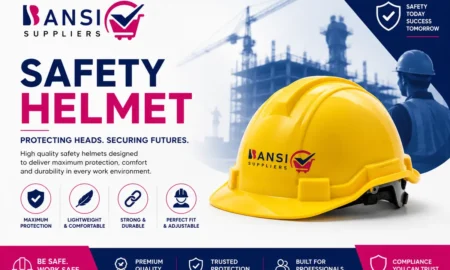
Safety helmets are important in construction sites, factories, warehouses, workshops, roadworks and industrial workplaces. They help protect workers from head injuries caused by falling objects, impact, bumps and other workplace hazards.
Apart from protection, safety helmets also help with site identification. In many workplaces, different helmet colours are used to identify workers by role. This makes it easier to recognize supervisors, engineers, general workers, safety officers, electricians, visitors and emergency response teams.
For businesses in Kenya, using the right helmet colour system can improve safety, communication and workplace organization.
At Bansi Suppliers, we supply quality safety helmets and PPE for construction companies, factories, warehouses, contractors, institutions and corporate workplaces across Kenya.
Why Safety Helmet Colours Are Important
A busy worksite can have many people working in different areas at the same time. Without proper identification, it can be difficult to know who is responsible for each task.
Helmet colours help solve this problem by making roles easier to identify.
A good helmet colour system helps to:
- Improve site organization
- Identify workers quickly
- Separate visitors from active workers
- Support emergency response
- Improve communication between teams
- Help supervisors manage work areas better
- Create a professional safety culture
For example, if there is an emergency, workers can quickly identify the safety officer, first aid team or fire marshal. This can help reduce confusion and improve response time.
Important Note About Helmet Colour Meanings
Helmet colour meanings may vary depending on the company, project or worksite. Not every workplace uses the same colour system.
However, many construction and industrial sites follow common helmet colour practices. The meanings below are commonly used as a guide.
Before applying a helmet colour system, your company should create a simple PPE policy. This policy should explain:
- Which colour is assigned to each role
- Who should wear each helmet colour
- Where helmets must be worn
- How helmets should be inspected
- When helmets should be replaced
This helps workers and visitors understand the system clearly.
Green Safety Helmet
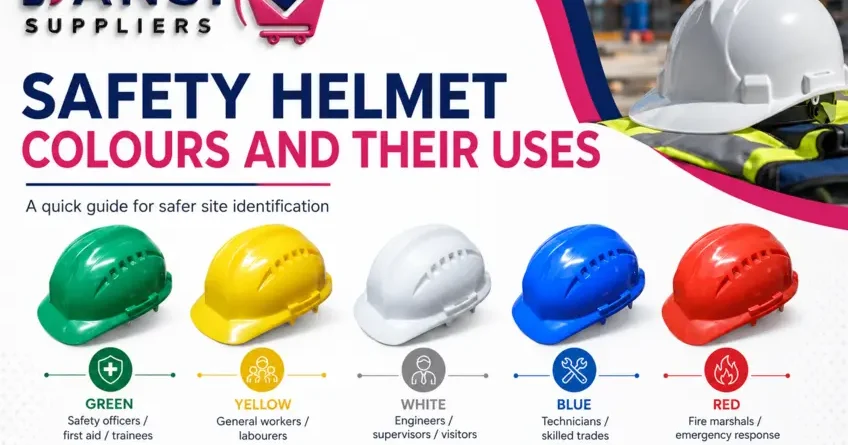
Green safety helmets are commonly used by safety officers, first aid staff, health and safety representatives or trainees.
Green is often linked with safety, health and emergency readiness. This makes it a useful colour for people responsible for workplace safety.
Common uses of green helmets
Green helmets are often used by:
- Safety officers
- First aid personnel
- Health and safety representatives
- Trainees or new workers
- Site safety supervisors
- Emergency support staff
A green helmet makes it easier for workers to identify the person responsible for safety guidance. For example, if there is an injury, unsafe area or hazard, workers can quickly locate the safety officer or first aid person.
Yellow Safety Helmet
Yellow safety helmets are commonly used by general workers, labourers, machine operators and site workers.
Yellow is bright and easy to notice, which makes it suitable for busy construction and industrial environments.
Common uses of yellow helmets
Yellow helmets are often used by:
- General construction workers
- Labourers
- Machine operators
- Warehouse workers
- Factory workers
- Roadwork teams
- Industrial workers
Yellow helmets are ideal for large teams involved in daily operations such as construction work, loading, material handling, warehouse duties and factory work.
For companies buying safety helmets in bulk, yellow helmets are one of the most practical options for general worker identification.
You can also combine helmets with other PPE such as safety boots, gloves, reflective jackets and protective clothing for better workplace protection.
White Safety Helmet
White safety helmets are commonly used by engineers, supervisors, managers, consultants, inspectors and visitors.
In many workplaces, white helmets are associated with leadership, supervision or technical authority.
Common uses of white helmets
White helmets are often used by:
- Site engineers
- Supervisors
- Project managers
- Architects
- Consultants
- Inspectors
- Visitors
- Company representatives
White helmets help workers identify people who are supervising, inspecting or visiting the site. They are also useful during project meetings, audits and client visits.
For companies that host visitors or consultants, white helmets help create a professional and organized site appearance.
Blue Safety Helmet
Blue safety helmets are commonly used by electricians, technicians, maintenance teams and skilled workers.
Technical workers often handle electrical work, machine repair, maintenance, installation and other specialized tasks. Blue helmets make them easier to identify.
Common uses of blue helmets
Blue helmets are often used by:
- Electricians
- Technicians
- Maintenance teams
- Machine repair staff
- Skilled tradespeople
- Technical operators
- Engineering support teams
For example, if there is an electrical issue on site, supervisors can quickly identify the electricians or technical team by their blue helmets.
Blue helmets are useful in factories, construction sites, warehouses, workshops and engineering projects.
Bansi Suppliers also supplies products such as the Blue Vaultex Safety Helmet for technical teams and industrial workplaces.
Red Safety Helmet
Red safety helmets are commonly used by fire marshals, emergency response teams, hazard response staff and fire safety personnel.
Red is a strong warning colour. It is often associated with danger, fire and emergency response.
Common uses of red helmets
Red helmets are often used by:
- Fire marshals
- Emergency response teams
- Fire safety personnel
- Rescue teams
- Hazard response staff
- Site emergency coordinators
In case of fire, accident or evacuation, red helmets help workers identify the people responsible for emergency response.
This is useful for large construction sites, factories, schools, warehouses, apartments, institutions and industrial workplaces.
How Helmet Colours Improve Workplace Safety
Helmet colour coding is a simple system, but it can make a big difference in workplace safety.
It helps companies:
- Reduce confusion on site
- Improve worker identification
- Control access to restricted areas
- Support safety inspections
- Improve emergency response
- Strengthen workplace discipline
- Present a more organized work environment
For example, if a person enters a restricted area, helmet colour can help supervisors know whether the person is a worker, visitor, technician or manager.
This is why helmet colours are useful for companies that want better safety control and professional site management.
How to Choose the Right Safety Helmets
When buying safety helmets, colour is important, but quality should come first. A helmet should be strong, comfortable and suitable for the work environment.
A good safety helmet should have:
- Strong outer shell
- Comfortable suspension system
- Adjustable headband
- Secure fit
- Reliable impact protection
- Durable material
- Proper ventilation where needed
Before placing an order, consider:
- Number of workers
- Job roles on site
- Required helmet colours
- Type of work environment
- Daily use conditions
- Bulk order needs
- Replacement requirements
For example, a construction company may need:
- Yellow helmets for general workers
- White helmets for supervisors and engineers
- Blue helmets for electricians and technicians
- Green helmets for safety officers
- Red helmets for emergency response teams
For work-at-height jobs, your team may also need specialized helmets such as the WAH safety helmet, depending on the work environment.
When Should Safety Helmets Be Replaced?
Safety helmets should be inspected regularly. A damaged helmet may not protect the worker properly.
Replace a helmet if you notice:
- Cracks
- Dents
- Deep scratches
- Broken straps
- Loose suspension
- Faded or brittle shell
- Heat damage
- Chemical damage
- Poor fit
- Damage after impact
A helmet should also be replaced after a strong impact, even if it does not look badly damaged. The internal structure may already be weakened.
Regular PPE inspection helps reduce workplace risks and prevent avoidable injuries.
Safety Helmet Supply in Kenya
Bansi Suppliers provides safety helmets in Kenya for construction companies, contractors, factories, warehouses, institutions, roadwork teams and industrial workplaces.
We support businesses that need PPE for staff safety, workplace compliance and bulk procurement.
Our safety helmets are suitable for:
- Construction sites
- Factories
- Warehouses
- Engineering firms
- Roadwork teams
- Contractors
- Schools and institutions
- Industrial workplaces
- Corporate safety departments
Apart from safety helmets, Bansi Suppliers also supplies:
- Safety boots
- Safety gloves
- Reflective jackets
- Protective clothing
- Respirators
- Eye protection
- Ear protection
- First aid kits
- Fire safety equipment
- Traffic control equipment
You can also read our guide on best PPE suppliers in Kenya for companies to learn how to choose a reliable PPE supplier.
Why Buy Safety Helmets from Bansi Suppliers?
Bansi Suppliers understands the needs of procurement teams, contractors, project managers and safety officers.
We support clients with:
- Quality safety helmets
- Multiple helmet colour options
- Bulk order support
- Professional quotations
- Reliable PPE sourcing
- Corporate procurement support
- Delivery support across Kenya
- Wider workplace safety product supply
Whether your company is setting up a new site, restocking PPE or preparing for safety requirements, Bansi Suppliers can help you source the right safety helmets and protective equipment.
Conclusion
Safety helmet colours help improve workplace safety, identification and organization. They make it easier to recognize different roles on site and support faster communication during daily operations or emergencies.
Common helmet colour uses include:
- Green: safety officers, first aid staff and trainees
- Yellow: general workers and labourers
- White: engineers, supervisors, managers and visitors
- Blue: electricians, technicians and skilled workers
- Red: fire marshals and emergency response teams
Although helmet colour meanings can vary by company or site, having a clear helmet colour system helps create a safer and more organized workplace.
For quality safety helmets in Kenya, Bansi Suppliers provides reliable PPE solutions for construction companies, factories, warehouses, institutions, contractors and corporate workplaces.
Need safety helmets for your team? Send your quantities and preferred helmet colours for a quick quotation today.
Call/WhatsApp: 0722 353 974
Website: www.bansisuppliers.co.ke
Bansi Suppliers — Quality. Safety. Reliability.