Reusable Chemical Spray Suit Care Guide: Inspection, Cleaning & Storage
Reusable chemical spray suits can provide useful body coverage for selected agricultural spraying, pest-control, industrial cleaning and chemical-handling activities.
However, buying a reusable suit is only the beginning.
Its continued suitability depends on correct selection, inspection, use, cleaning, decontamination and storage.
A suit that is damaged, contaminated or incorrectly maintained should not continue to be used simply because it is described as reusable.
What Is a Reusable Chemical Spray Suit?
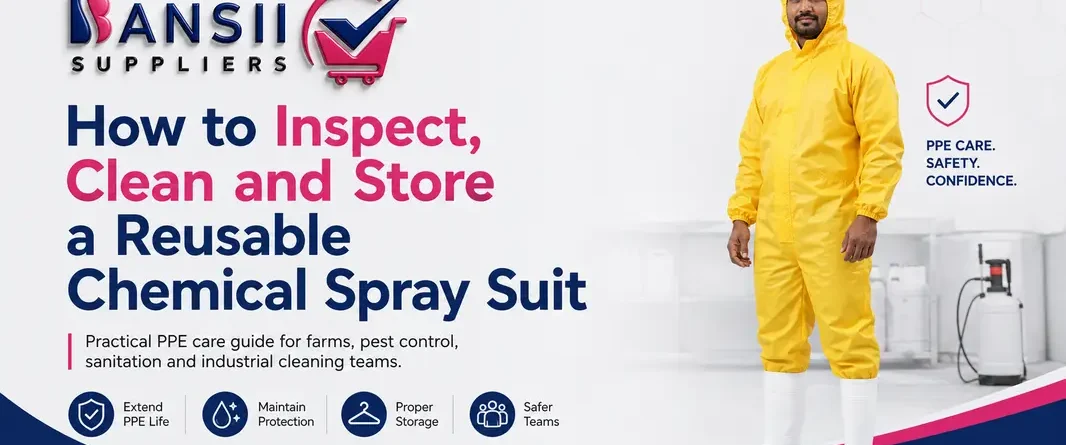
A reusable chemical spray suit is protective clothing designed for more than one use where the manufacturer permits cleaning and reuse.
Depending on the product, the garment may include:
- One-piece construction
- Integrated hood
- Long sleeves
- Full-length leg coverage
- Fitted or elasticated openings
- Front fastening or closure
- Material intended for selected spraying or workplace applications
The exact construction varies between products.
For the current Bansi Suppliers product, see Reusable Chemical Spray Suit Kenya.
For wider company sourcing, visit Protective Spray Suit Supplier Kenya.
Reusable Does Not Mean Unlimited Use
A reusable suit does not have an unlimited service life.
How long it remains suitable can depend on:
- Garment material
- Construction
- Chemical or pesticide involved
- Frequency of use
- Type of exposure
- Cleaning method
- Decontamination procedure
- Storage conditions
- Physical wear
- Manufacturer guidance
A garment should be removed from service when its condition or contamination history makes continued use unsuitable.
Why Spray Suit Inspection Matters
Protective suits can become damaged during normal work.
Movement, contact with equipment, chemicals, repeated cleaning and general wear may affect the garment over time.
Some defects may be small but still reduce the intended clothing coverage.
Inspect reusable protective suits before and after use.
Pre-Use Inspection Checklist
Inspect the complete garment in a well-lit area before it is issued to a worker.
Check the Suit Material
Look over the front, back, arms and legs.
Check for:
- Holes
- Cuts
- Tears
- Abrasion
- Thin areas
- Cracking
- Peeling
- Hardening
- Discolouration
- Other material changes
Pay particular attention to areas exposed to repeated bending and movement, such as the knees, elbows, shoulders and crotch.
Check the Seams
Inspect all seams carefully.
Look for:
- Split seams
- Open stitching
- Loose threads
- Peeling seam tape
- Visible gaps
- Signs of material deterioration
Do not attempt an improvised repair unless an approved repair method is provided for the specific garment.
Inspect the Front Closure
Check the zip, fastening system and any protective flap.
The closure should operate correctly and remain secure during normal use.
Look for damage, missing components, tearing or areas that could leave the worker unnecessarily exposed.
Examine the Hood
Check the hood and face opening for damage or excessive stretching.
Where the worker also wears:
- Goggles
- Face protection
- Respiratory equipment
- Other head or face PPE
confirm that the equipment can be worn together without creating obvious gaps or interfering with safe movement and visibility.
Check Wrist & Ankle Areas
Inspect fitted or elasticated openings for:
- Tearing
- Stretching
- Loss of elasticity
- Material damage
Also review how the suit interfaces with gloves and gumboots.
The aim is to avoid unnecessary exposed gaps between different PPE items.
Removing a Contaminated Spray Suit
Incorrect removal can transfer contamination from the outside of the garment onto the worker, ordinary clothing or nearby surfaces.
The correct removal sequence depends on the substance involved and the organisation’s approved procedure.
Workers should be trained in the specific process used at their workplace.
A general approach may involve:
- Moving to the designated PPE-removal area.
- Following any approved surface-decontamination procedure.
- Avoiding unnecessary contact with the contaminated outer surface.
- Removing supporting PPE in the approved sequence.
- Opening and removing the garment carefully.
- Containing the used suit for cleaning, decontamination or disposal.
- Washing exposed skin according to workplace procedures.
- Reporting garment damage, spills or suspected exposure.
Written instructions should support practical worker training rather than replace it.
Cleaning vs Decontamination
Cleaning and decontamination are related, but they are not necessarily the same process.
Cleaning generally removes dirt, residue and other material from the garment.
Decontamination is intended to reduce or remove a hazardous contaminant to the level required by the relevant procedure.
A garment may look visually clean while still not being suitable for reuse.
The correct procedure depends on:
- Substance involved
- Concentration
- Garment material
- Degree of contamination
- Manufacturer instructions
- Safety Data Sheet
- Workplace procedure
Do not assume ordinary washing is sufficient for chemical or pesticide contamination.
How to Clean a Reusable Chemical Spray Suit
There is no universal cleaning method for every reusable protective suit.
Always follow the manufacturer’s care instructions for the exact garment.
A controlled process may include:
- Separating contaminated PPE from clean workwear
- Using a designated cleaning area
- Wearing suitable PPE during cleaning
- Removing contamination according to the approved procedure
- Using permitted cleaning products
- Rinsing where required
- Inspecting the garment after cleaning
- Allowing it to dry fully
- Recording damage or defects found
Do not wash contaminated protective suits together with household clothing, office uniforms or ordinary workwear.
Can a Reusable Spray Suit Be Machine Washed?
Only machine wash a protective suit when the manufacturer specifically permits it.
Some garment materials or coatings may be affected by:
- Strong detergents
- Bleach
- Excessive water temperatures
- Aggressive wash cycles
- Mechanical spinning
- Solvents
- Abrasive cleaning
- High-temperature drying
If manufacturer instructions are unavailable, do not automatically assume that machine washing is safe.
Drying a Reusable Spray Suit
A cleaned suit should be completely dry before storage or reuse.
Depending on the manufacturer’s instructions, drying may require:
- A clean area
- Good ventilation
- Protection from excessive heat
- Protection from open flames
- Separation from active chemical areas
- Suitable protection from direct sunlight where required
Both the inside and outside should be allowed to dry properly.
Do not use high-temperature drying unless the manufacturer permits it.
How to Store Reusable Chemical Spray Suits
Store clean protective clothing separately from contaminated or damaged PPE.
A suitable storage area should normally be:
- Clean
- Dry
- Ventilated
- Protected from unnecessary sunlight
- Away from chemicals
- Away from excessive heat
- Away from sharp objects
- Clearly organised
- Accessible to authorised workers
Avoid unnecessarily crushing or tightly folding the garment if this could damage its material or coating.
When Should a Reusable Chemical Spray Suit Be Replaced?
Remove a reusable suit from service when it can no longer provide the required condition or when safe decontamination is no longer possible.
Replacement may be necessary where there are:
- Tears
- Punctures
- Open seams
- Damaged closures
- Damaged wrist or ankle areas
- Cracking
- Peeling
- Loss of flexibility
- Material degradation
- Permanent contamination
- Uncertain contamination history
- Damage that cannot be repaired using an approved method
Also follow any manufacturer-defined service limits or disposal requirements.
A small-looking defect should not automatically be ignored.
Keep a Reusable PPE Inspection Record
Companies using reusable protective clothing can benefit from a basic inspection and issue record.
The record may include:
- Employee or department
- Suit identification
- Garment size
- Date issued
- Date used
- Task or substance involved
- Cleaning date
- Inspection result
- Defects found
- Corrective action
- Replacement date
- Supervisor approval
Records can help safety and procurement teams identify frequent damage, replacement trends and future stock requirements.
Reusable Spray Suits for Flower Farms
Reusable protective suits may be considered for selected agricultural spraying programmes where the manufacturer permits cleaning and reuse.
Flower farms should assess the garment against the actual:
- Pesticide
- Concentration
- Application task
- Exposure conditions
- Worker role
- Product specification
For flower-farm garment selection, see Pesticide Spray Suits for Flower Farms Kenya.
For the complete worker PPE requirement, visit PPE for Flower Farm Spraying Teams Kenya.
Complete PPE for Spraying & Chemical Work
A spray suit protects only part of the worker.
Depending on the task and hazard, additional PPE may include:
Safety Gloves Kenya for suitable hand protection.
Respirators Kenya for respiratory-protection requirements.
Eye Protection Supplier Kenya for goggles and other eye or face protection.
Safety Gumboots Supplier Kenya for suitable workplace footwear.
For broader chemical-protection requirements, visit Chemical PPE Supplier Kenya.
The complete PPE system should be selected according to the identified workplace hazard.
Common Reusable Spray Suit Mistakes
Reusing Without Inspection
Damage from a previous task may go unnoticed.
Inspect the garment before every new issue.
Assuming Colour Confirms Protection
A yellow or brightly coloured suit is not automatically chemical-resistant or pesticide-proof.
Colour does not establish compatibility or protection performance.
Using Ordinary Household Laundry Procedures
Normal laundry methods may damage the garment or spread contamination.
Follow the approved care and decontamination instructions.
Storing the Suit While Wet
Do not place a wet garment directly into closed storage.
Allow it to dry according to the manufacturer’s instructions.
Mixing Clean & Contaminated PPE
Keep clean PPE separate from items awaiting cleaning, decontamination or disposal.
Ignoring Employee Sizing
An incorrectly sized garment can restrict movement, place stress on the material or interfere with work.
Confirm available sizes before large workforce orders.
Reusing Heavily Contaminated Clothing
Not every contaminated garment can be safely returned to service.
Follow manufacturer guidance and workplace procedures when deciding whether to clean, reuse or dispose of the suit.
Buying Reusable Chemical Spray Suits in Kenya
When requesting a quotation, provide:
- Required quantity
- Employee sizes
- Intended workplace task
- Chemical or pesticide involved where relevant
- Expected exposure
- Required technical specification
- Supporting PPE
- Delivery location
- Required delivery date
Bansi Suppliers supplies Reusable Chemical Spray Suits in Kenya for suitable company, farm, cleaning, pest-control and industrial requirements.
For wider protective-suit sourcing, visit Protective Spray Suit Supplier Kenya.
Companies with an existing RFQ, BOQ, Excel schedule or PDF can Upload a Procurement List for quotation.
Frequently Asked Questions
How many times can a reusable chemical spray suit be used?
There is no universal number. Service life depends on the garment, manufacturer instructions, exposure, cleaning process and condition after each use.
Should a reusable spray suit be cleaned after every use?
Follow the manufacturer’s instructions and workplace procedure. A contaminated garment should not simply be stored and reissued without the required cleaning or decontamination.
Can a torn chemical spray suit be repaired?
Only use a repair method approved for the specific garment. An improvised patch or repair may not restore the required condition.
Can reusable spray suits be machine washed?
Only if the manufacturer permits machine washing and provides suitable care instructions.
Can employees share reusable spray suits?
Sharing can create sizing, hygiene and contamination-control issues. Where suits are shared, they should be managed through an appropriate cleaning, inspection and issue system.
Are reusable spray suits suitable for every pesticide?
No. Suitability depends on the specific pesticide, application task, exposure conditions and garment specification.
When should a reusable spray suit be replaced?
Replace or remove the garment from service when it is damaged, degraded, permanently contaminated or otherwise unable to meet the required condition.
Are gloves, gumboots and respirators included with the spray suit?
They are separate PPE items unless expressly included in a quotation or complete worker kit.
Request a Reusable Chemical Spray Suit Quotation
Need reusable protective suits for a farm, pest-control company, cleaning operation, factory or project?
Send Bansi Suppliers your quantities, employee sizes, intended application and required technical specifications through our Request a Quotation page.
Bansi Suppliers — Source. Supply. Succeed.